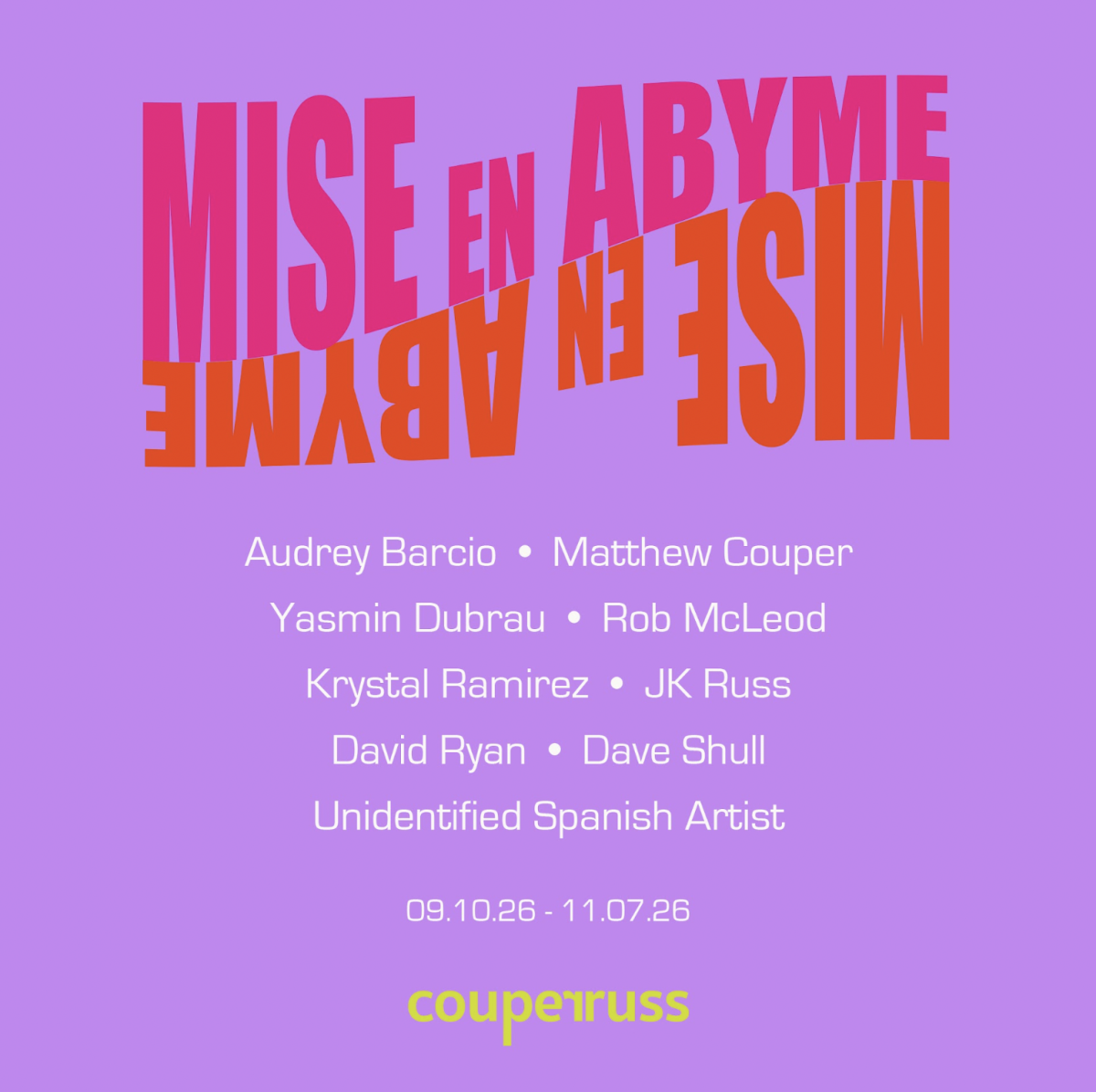
MISE EN ABYME
September 10 - November 7, 2026
Featured artists:
Dave Shull and an Unidentified Spanish artist.
The concept of mise en abyme, literally translated from French as “placing into the abyss,” describes the phenomenon of recursive representation: an image within an image, a narrative within a narrative, or a frame within a frame.
Originating in heraldic arms and shields, the concept was later adapted into literature, cinema, and the visual arts. Visually and conceptually, mise en abyme creates an effect that heightens existential self-reflection, viewer vertigo, the deconstruction of reality and the sense of an infinite regression of images and patterns.
Las Vegas is a city that rarely presents a thing only once. The Eiffel Tower appears where the Eiffel Tower is not. Venice arrives without Venice. Ancient Egypt is rebuilt with a beam of light shooting from the top of the pyramid into the desert sky. Along the strip, the city produces images of other places, other histories, other desires. It reflects and refracts both high and low culture through the recursive visual codes of a city built, in part, upon recognition, repetition, and desire.It is a place where looking and recognizing are almost the same activity.
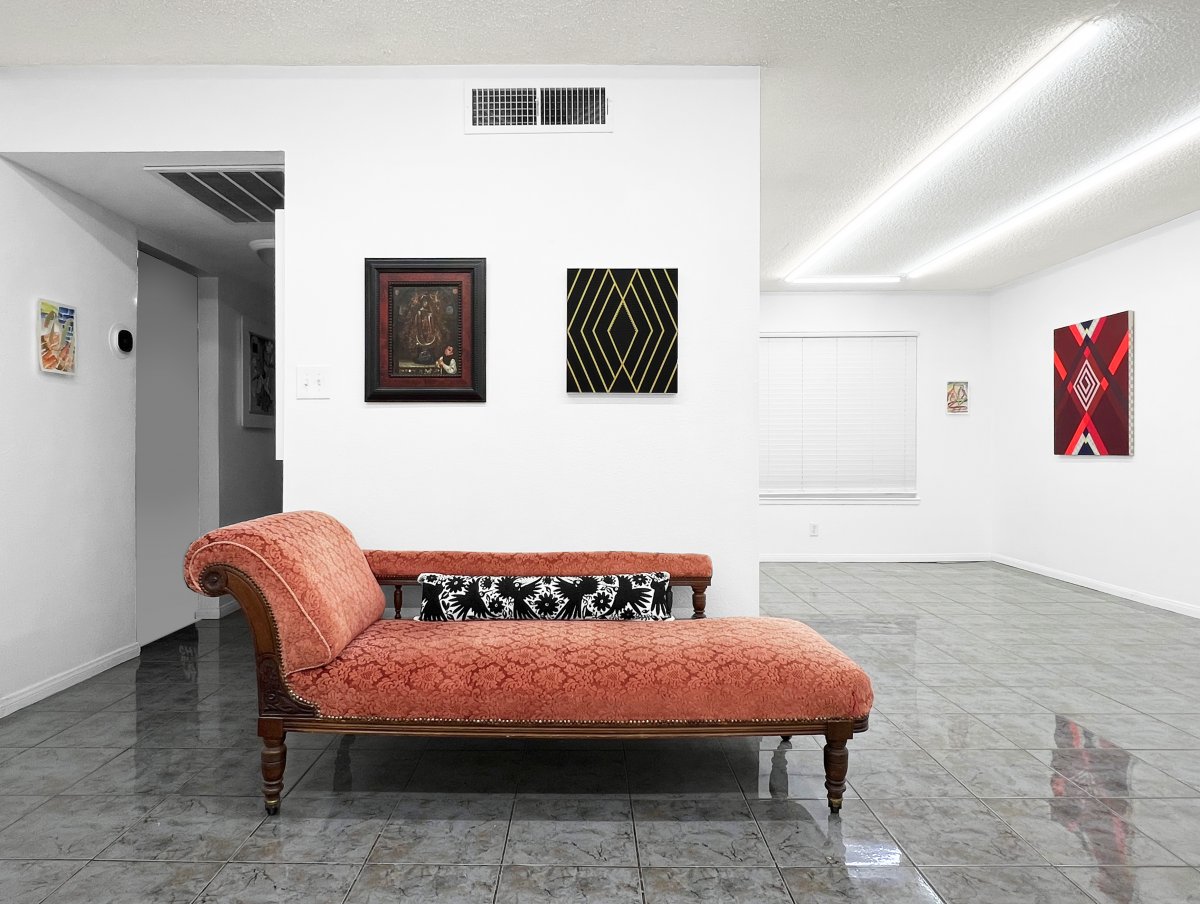
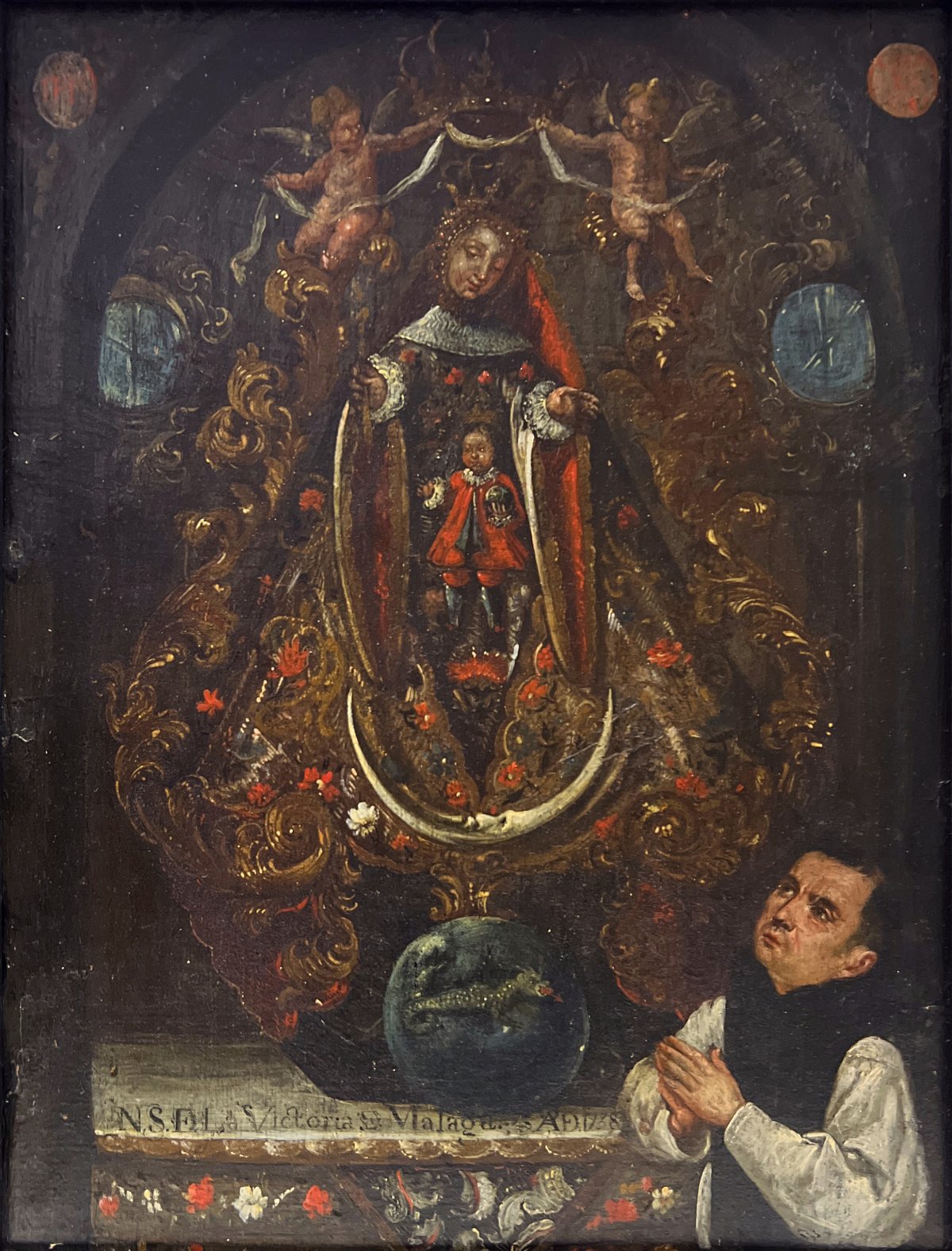
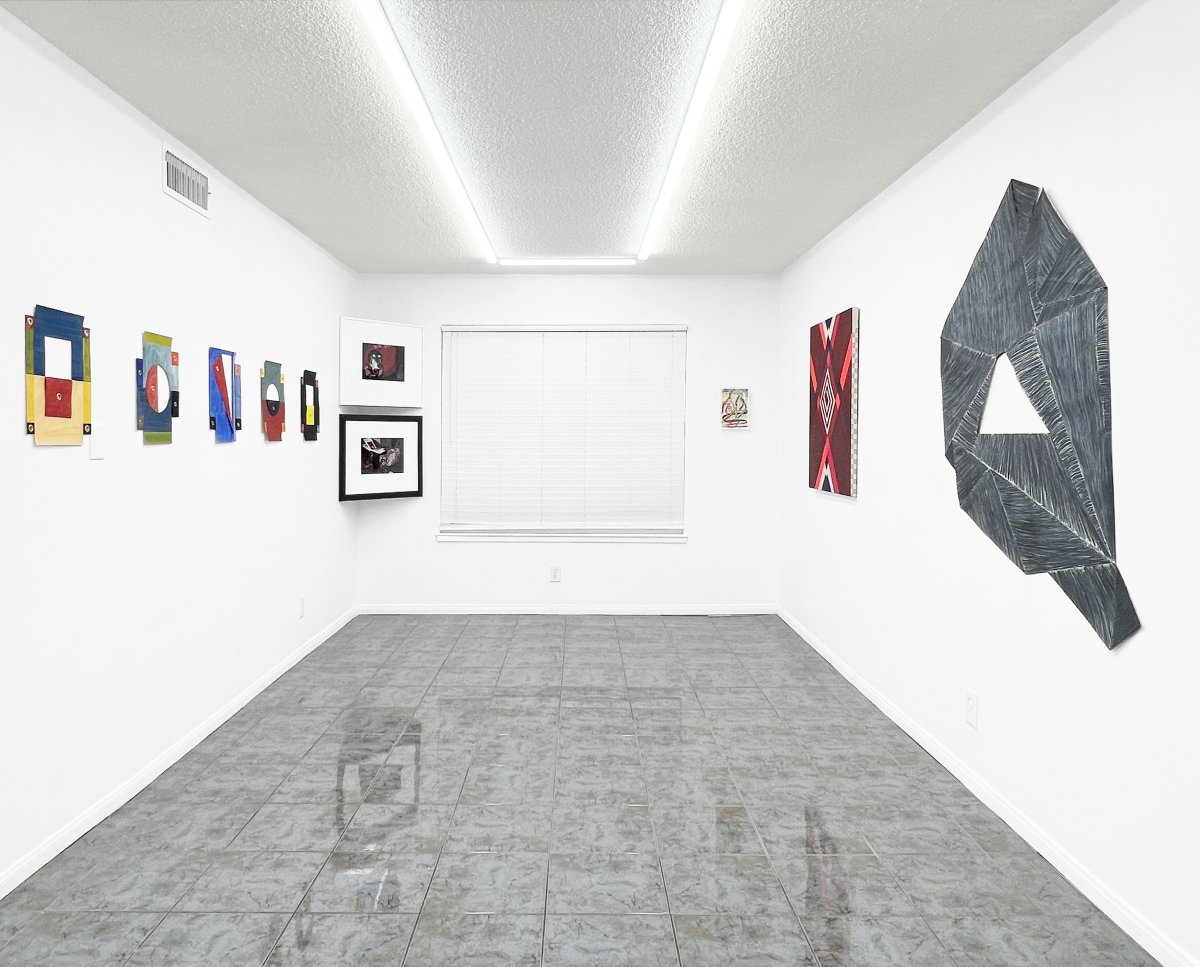
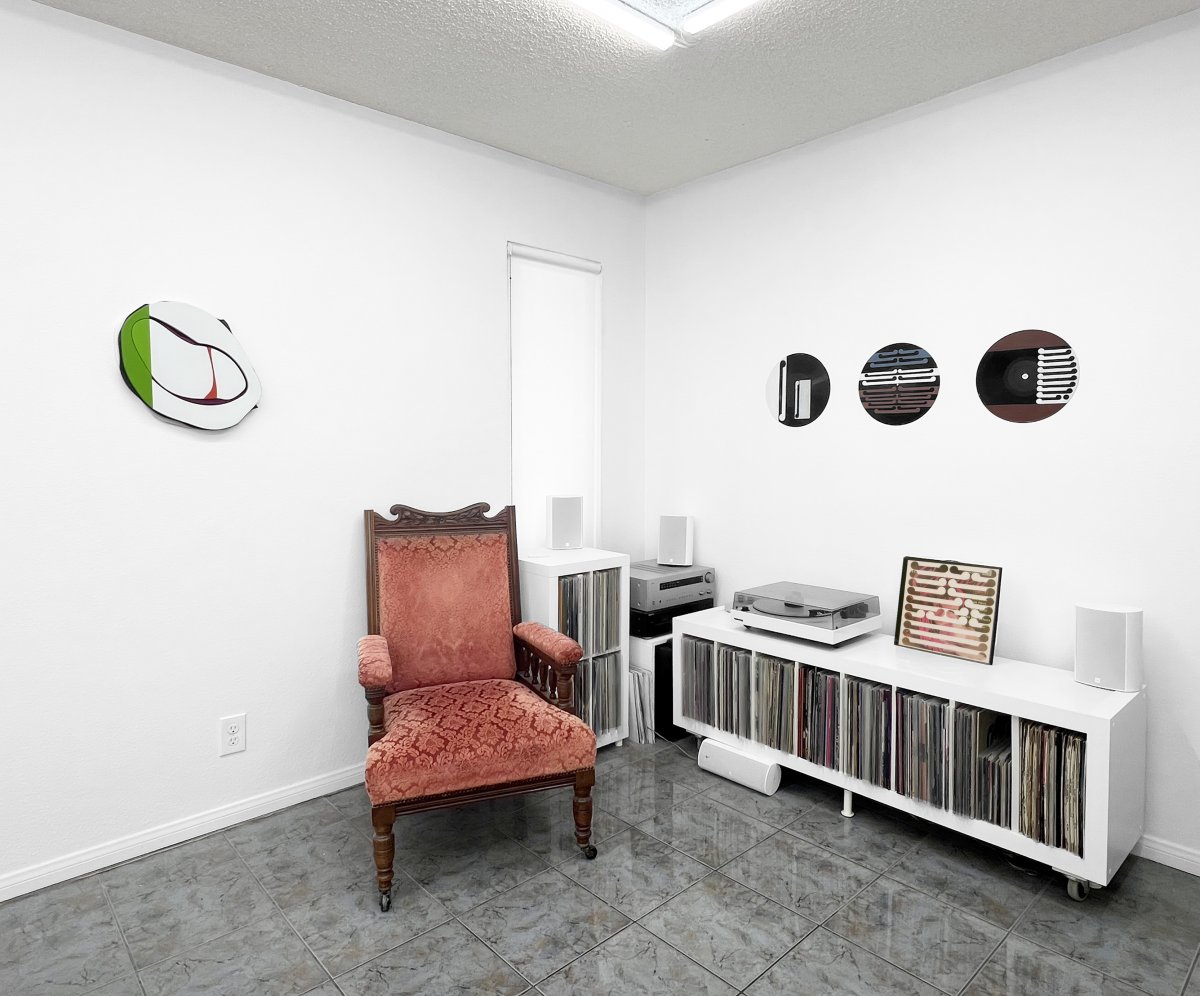
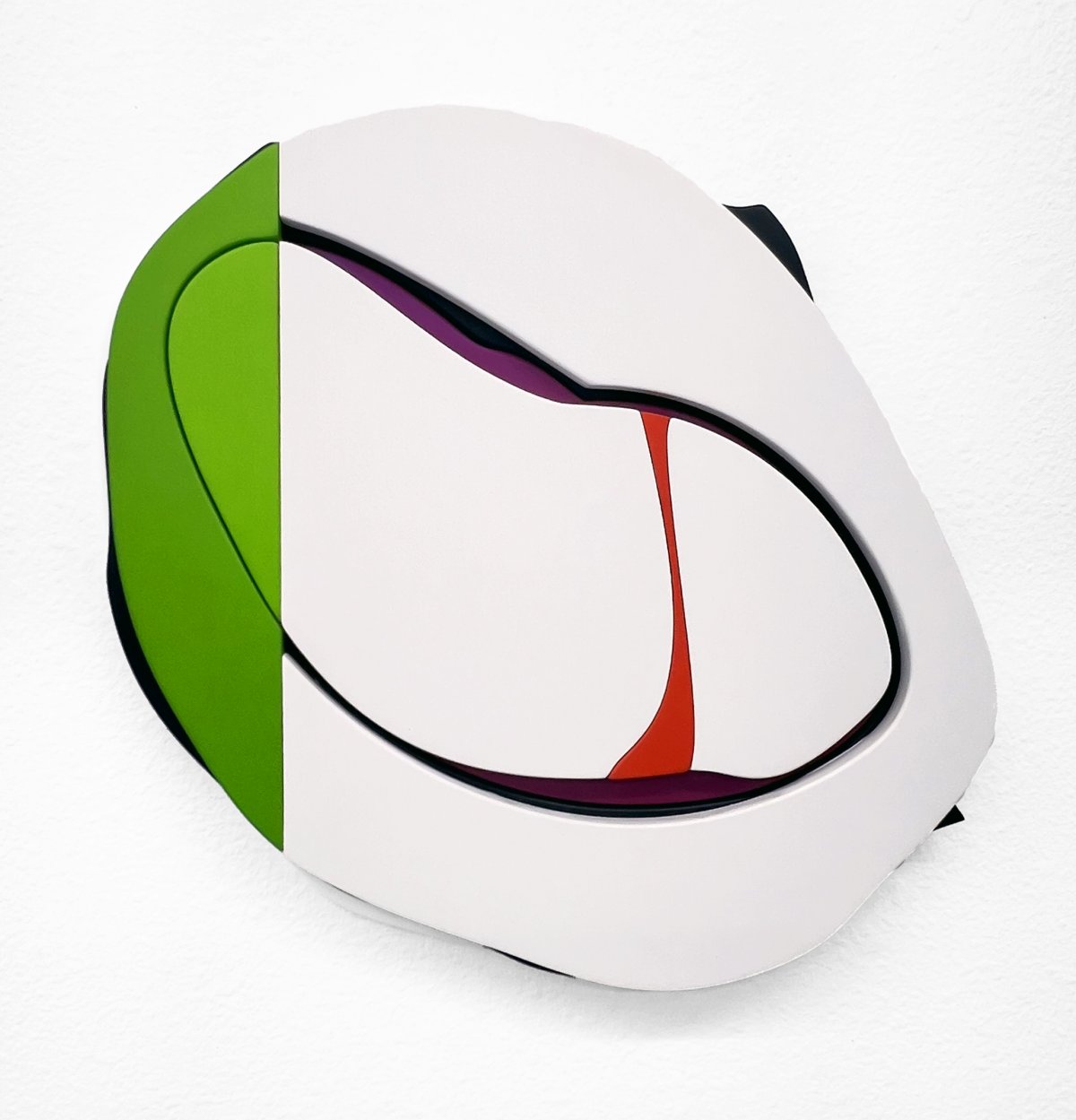
The first artwork in the exhibition, although painted in 1739 on another continent, is included to demonstrate the conceptual possibilities of regressive imagery. Painted by an unidentified Spanish Colonial artist, the work depicts a pious foreground figure, most probably the commissioner of the retablo, gazing upward toward the Madonna. The Madonna, in turn, gazes inward toward the small figure she encompasses. Beside it, Audrey Barcio’s Piqued (2026) offers a contemporary echo. Its abstraction has no literal religious narrative (aside from the 18k gold leaf often used in religious ikon painting), yet its composition recalls the mandorla surrounding the Madonna. One work contains another kind of image; the other contains the memory of one.
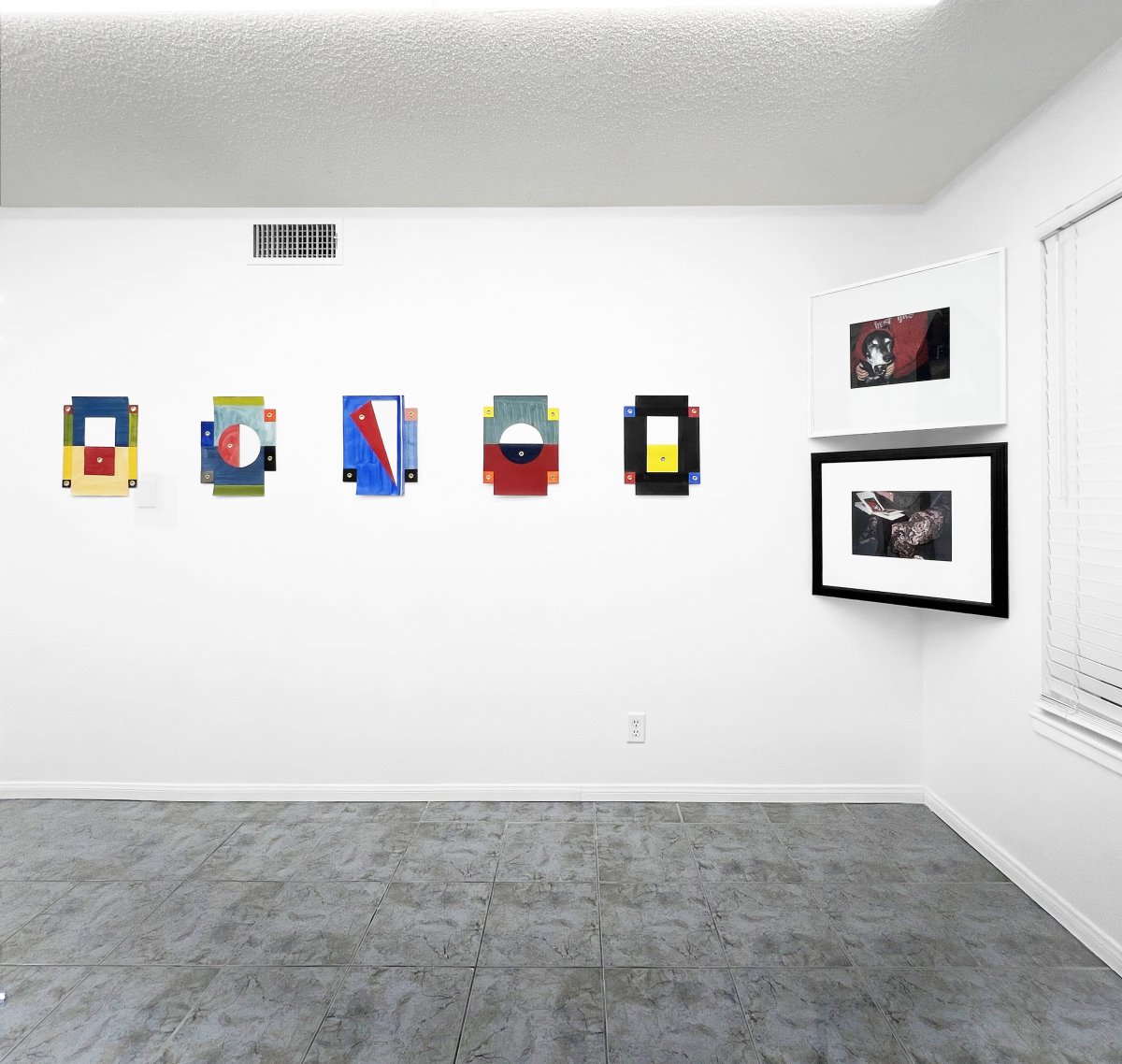
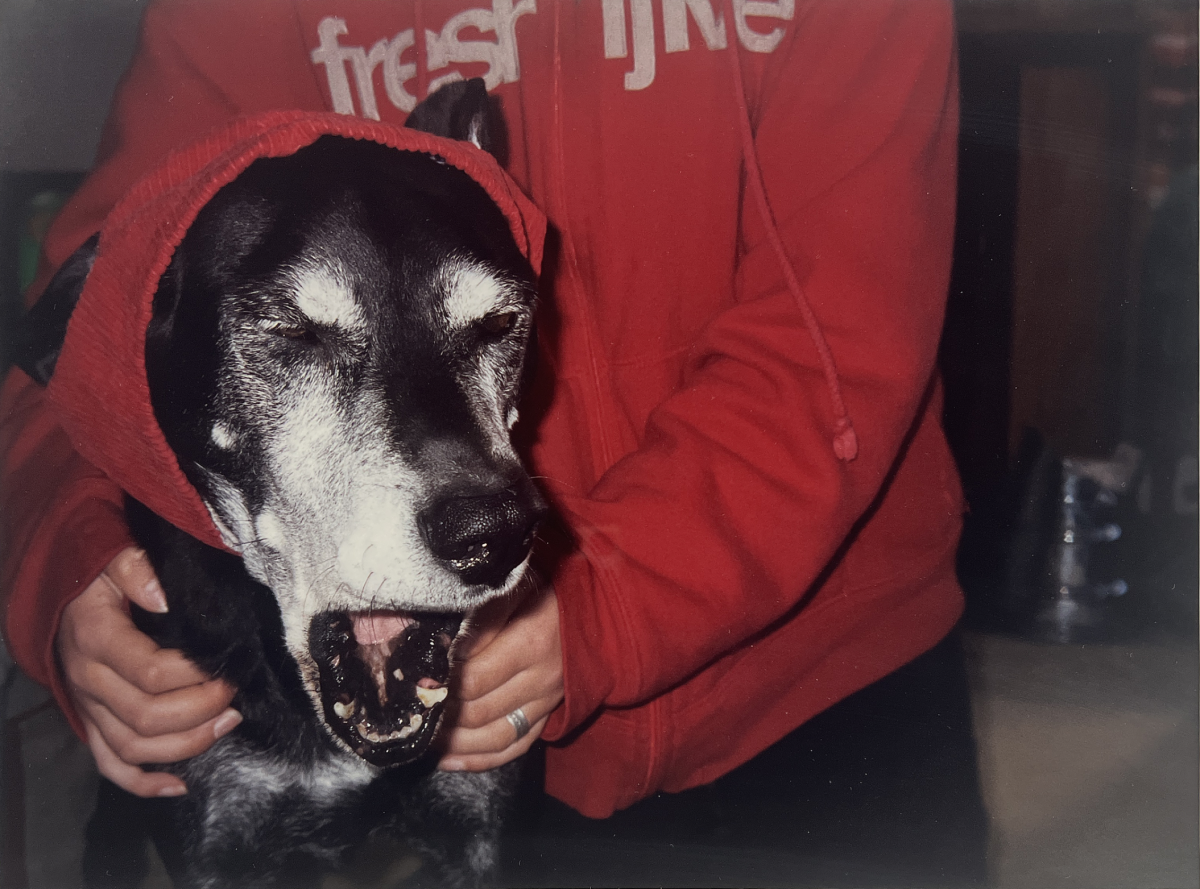
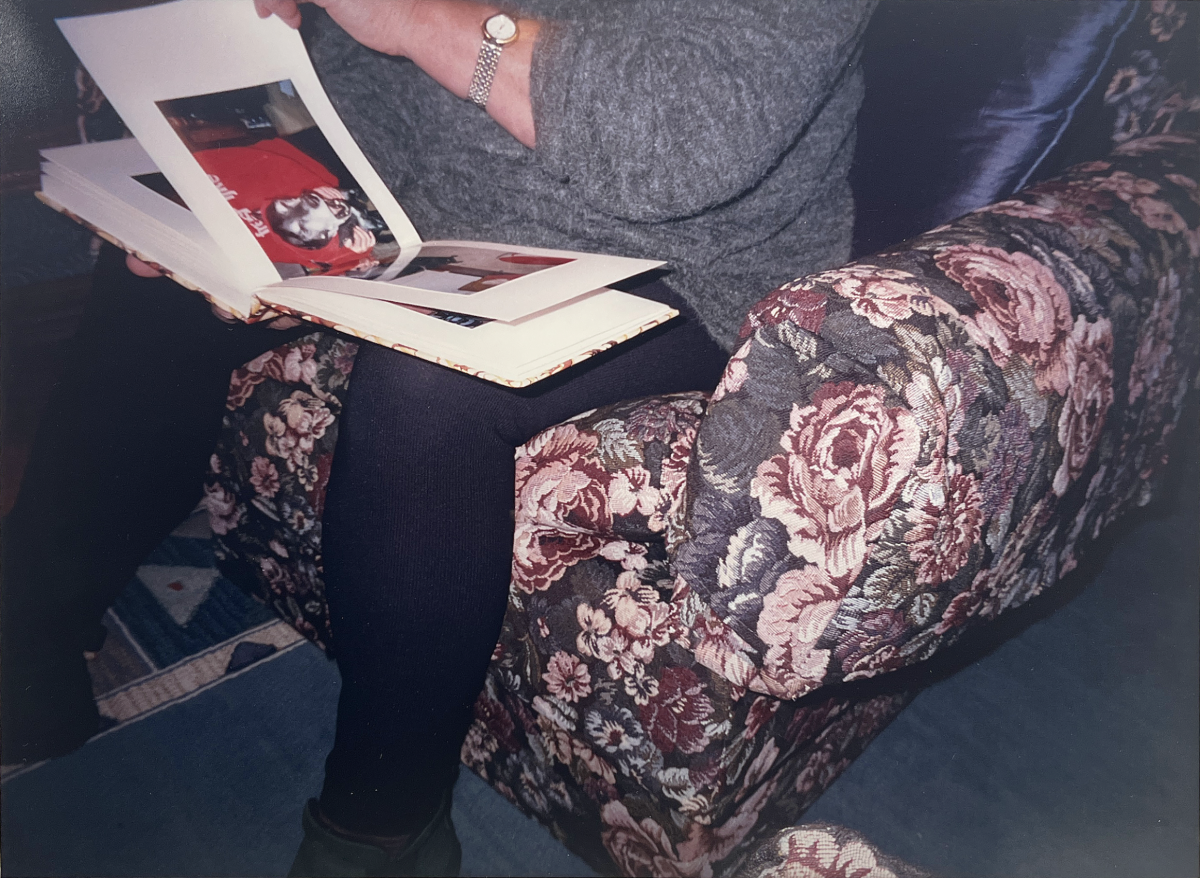
JK Russ’s paired photographs from 2002 make the mechanism more literal. In one photograph, the artist’s niece and their dog Ruby appear. In the photograph below, the artist’s mother leafs through a portfolio of exhibition photographs - and there, among those photographs, the earlier image appears again. The original image becomes part of another image. The act of looking becomes part of what is being looked at. A familial loop is lassoed around the concept of the two photographs.
Modernist abstraction has often been understood as a practice of turning inward. From the recursive fields of Mark Rothko to the modular squares of Josef Albers, painters of the mid-twentieth century staged visual environments in which forms appeared to reflect, absorb, or contain themselves. In these works, mise en abyme functions not simply as formal repetition but as existential inquiry - a deepening spiral into perception itself.
In a postmodern context, mise en abyme becomes a critical tool. Peter Halley, for instance, reimagined geometric abstraction as a diagram of social and architectural control. His “cells” and “conduits,” repeated across canvases like urban circuits, echo the endless loops of mediated space. Halley described his work as a response to the “cellular” nature of contemporary architecture and digital life.
David Ryan, a Las Vegas–based artist, works at the edge of abstraction through tangible Googie architectonic forms and layered surfaces, with an emphasis on fetish finish that was prominent in Los Angeles in the 1960s. His professor, Dave Hickey, once called Ryan the “First Artist” - an exasperation at Ryan’s consuming devotion to the pure modernist tendencies of line, form, color, scale, mass, and volume. Ryan’s compositions employ modular geometries, nested planes, and shadowed reliefs that suggest recursion, not as optical illusion, but as an index of built space and psychological rhythm. If there were a biological descriptor for his process, it might be embryonic. His paintings fold in on themselves, splitting like cells during production. The effect is like a contemporary nature morte - the living form frozen in time and space.
_________________
A city structured around simulation, Las Vegas collapses time and space into a continuous visual present. It famously stages copies of the Eiffel Tower, the canals of Venice and the Campanile di San Marco, the pyramids of Giza, and the Sphinx. These are not necessarily acts of homage so much as a proverbial big, architectonic toe stepping into Narcissus’s pond of aesthetic consumables. The city collapses time and space into a continuous abyss.
As Jean Baudrillard argued, Las Vegas is “the simulacrum par excellence”: not a copy of the real, but a reality modeled according to the logic of its own image. The result is an urban mise en abyme in which images are nested within illusions, which are nested within performances.
This spatial and visual recursion extends into the interiors of the city. Casinos, for instance, are designed with mirrored ceilings, kaleidoscopic lighting, and carpets that can simultaneously guide and disorient. Their architectures of visual control function like abstract paintings translated into three dimensions. In this way, Las Vegas aestheticizes mise en abyme as a lived experience. You do not simply view it; you enter into it.
Several contemporary artists working in and around Las Vegas embody or address this recursive aesthetic through their practices, many of which operate within or adjacent to abstraction.
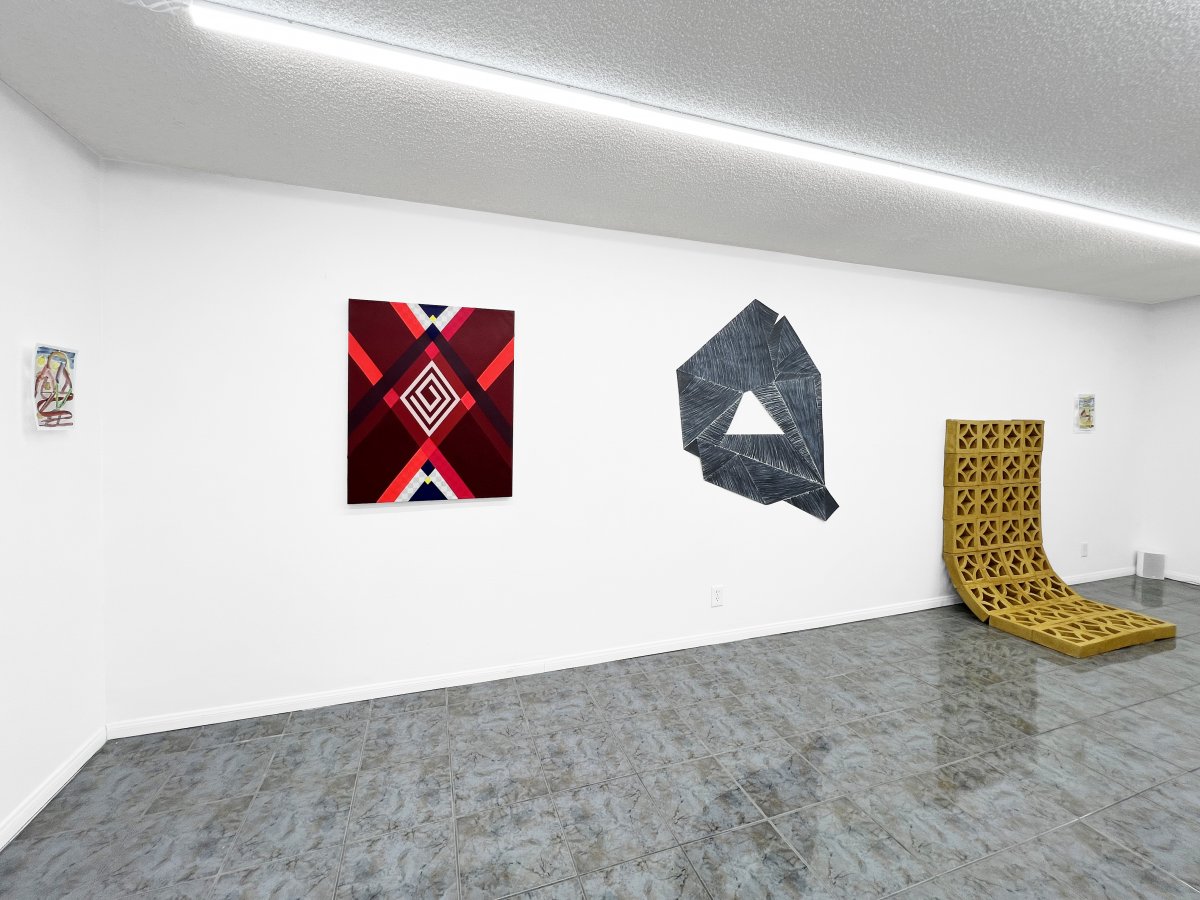
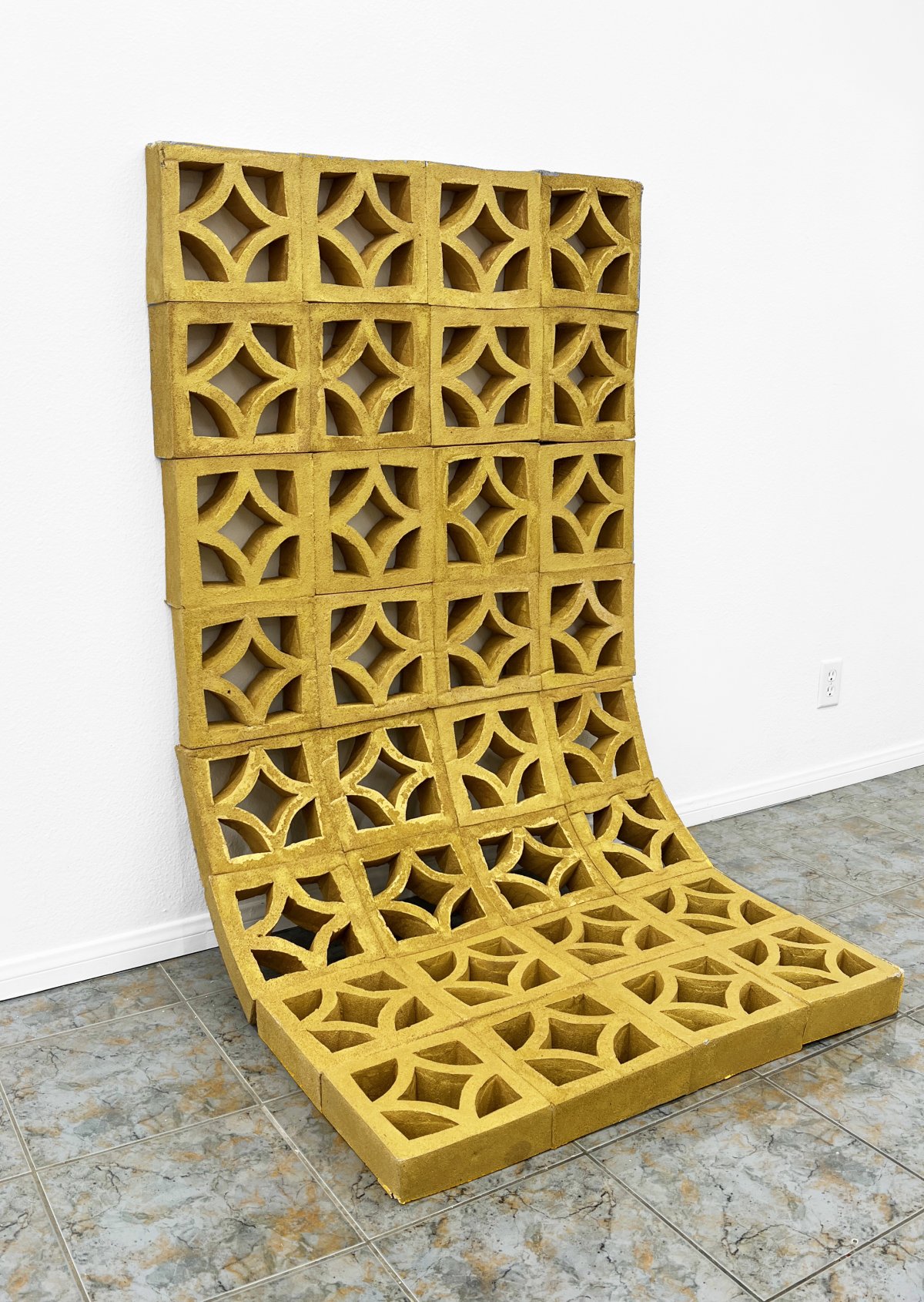
Krystal Ramirez’s sculptures and text-based works frequently use repetition to foreground questions of visibility, labor, and identity. Her pieces, often mimicking utilitarian materials such as mid-century cinderblock, repeat affirmations or pleas -“I was happy then” or “I miss the old days” - across expansive surfaces. Forms are often constructed to deny their own materiality. In this way, Ramirez’s work enacts a mise en abyme of self-assertion and utilitarian strength: the phrase or object is not simply repeated but amplified into a field of reflection, where the viewer’s gaze becomes part of a recursive loop of pattern recognition and denial. Her soft sculpture I Miss You (2023) slumps against the wall and seeps onto the floor, What initially reads as hard sculpture begins to behave like something soft. The object appears to surrender its own physical certainty. For Ramirez, a sentence that might initially feel personal becomes architectural. A private memory becomes a public structure.
Audrey Barcio’s triangles offer another way into the visual language of Las Vegas. Their solid, geometric forms recall the mass of the MGM Luxor Hotel and Resort pyramid, while the transparencies of the paint echo the enormous beam of light emitted from its apex and visible across the Las Vegas Valley. The pyramid is both architecture and image; Barcio’s paintings hover somewhere between the two.
While some artists in the exhibition directly engage the vernacular of Las Vegas aesthetics, others approach recursion through process and material.
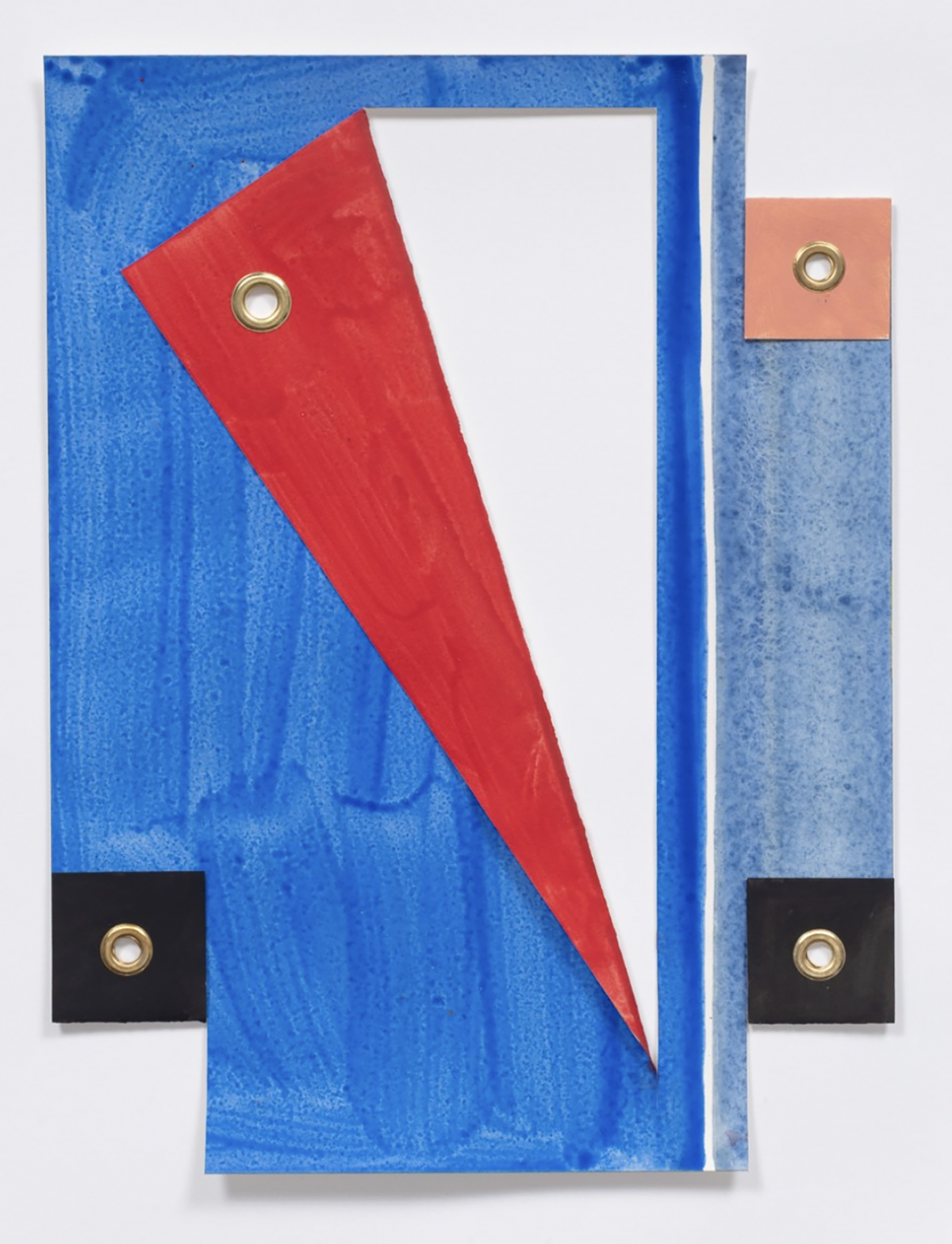
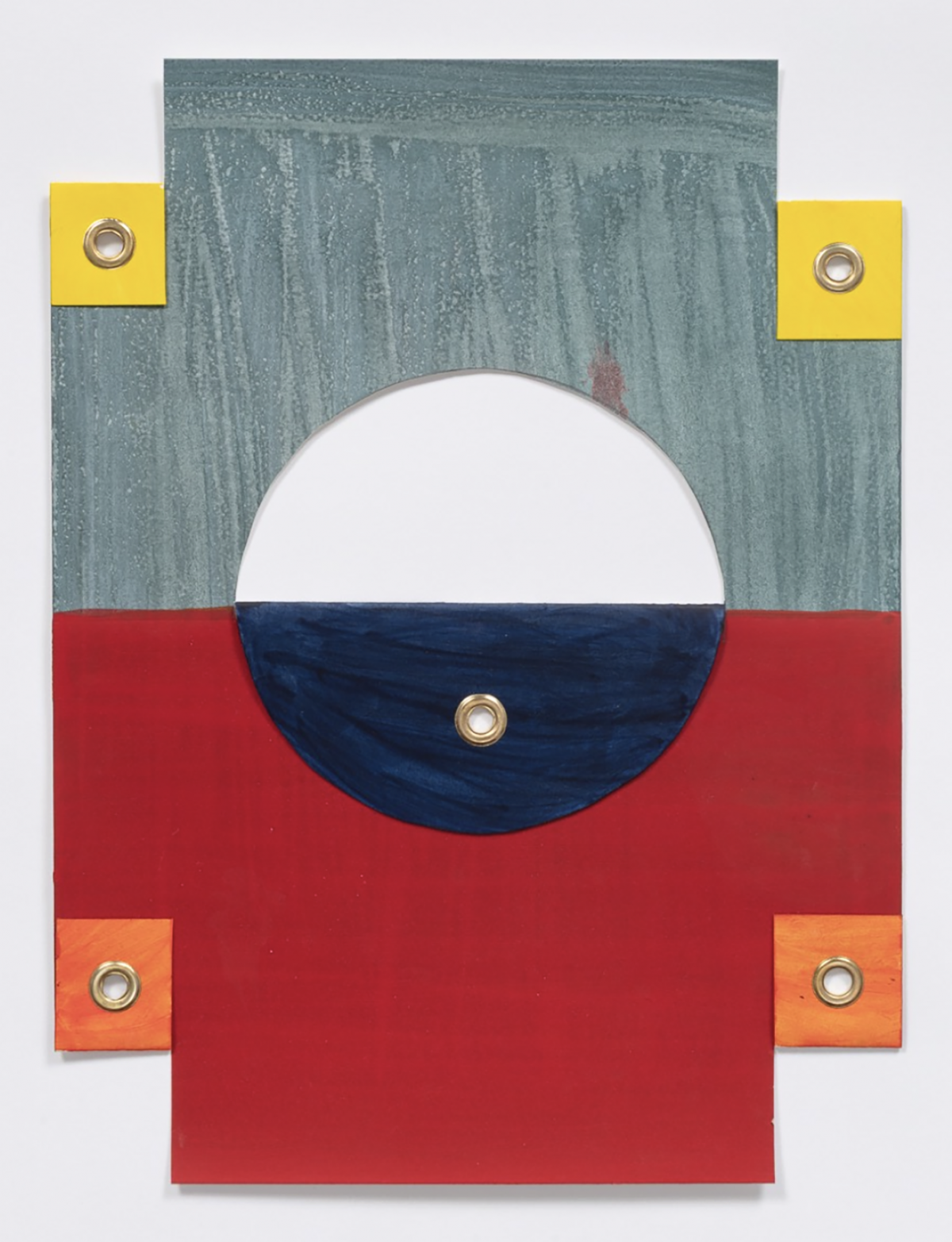
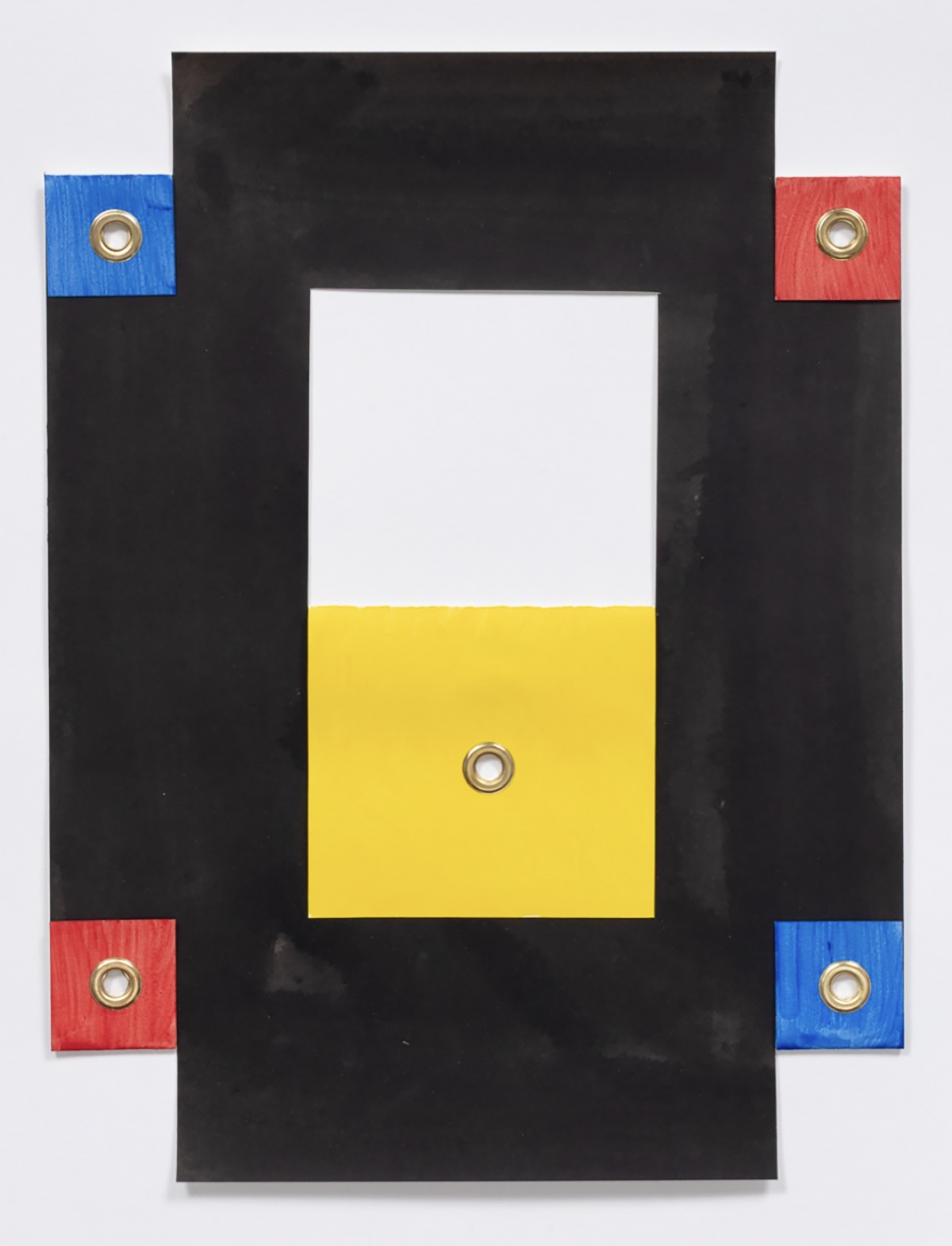
Dave Shull’s cut, manipulated, folded, and cinched-with-grommet works draw upon the mode of paper architecture: studies of conceptual monumentality constructed from humble sheets of paper. The cavities formed by scoring and folding crescents, rectangles, squares, and triangles play against - and with - the circular grommets that hold them in place. The repetitive title Sentimental Architecture hints at an activation of the inanimate: the human interaction with, and manipulation of, raw material.
Similar in visual language to Shull’s series, Rob McLeod’s Lanark series consists of large, cut and folded, alla prima, graphite-laden surfaces that push gesture to an extreme - from the interior, empty cut-out shapes to the exterior edges of the works. Although physically flat, the surfaces begin to undulate upon closer inspection.The gestural, industrial-gray graphite recalls McLeod’s memories of growing up in 1960s Glasgow, Scotland, while the works reference the mystical story of Lanark, the epic novel by Scottish writer Alasdair Gray about an art-school student from Glasgow, McLeod’s city of birth. Here, personal memory, literary reference, material process, and physical form fold into one another.
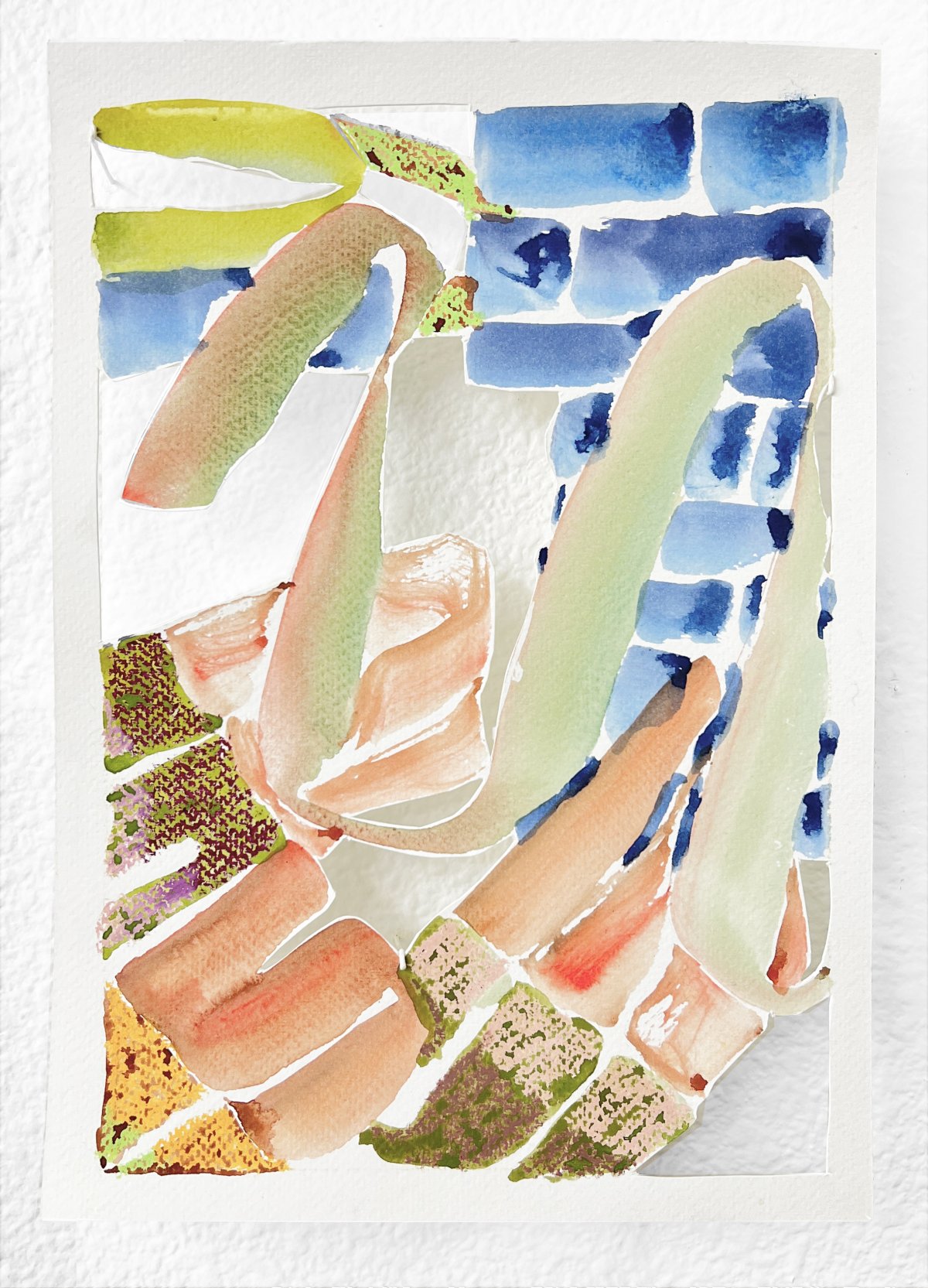
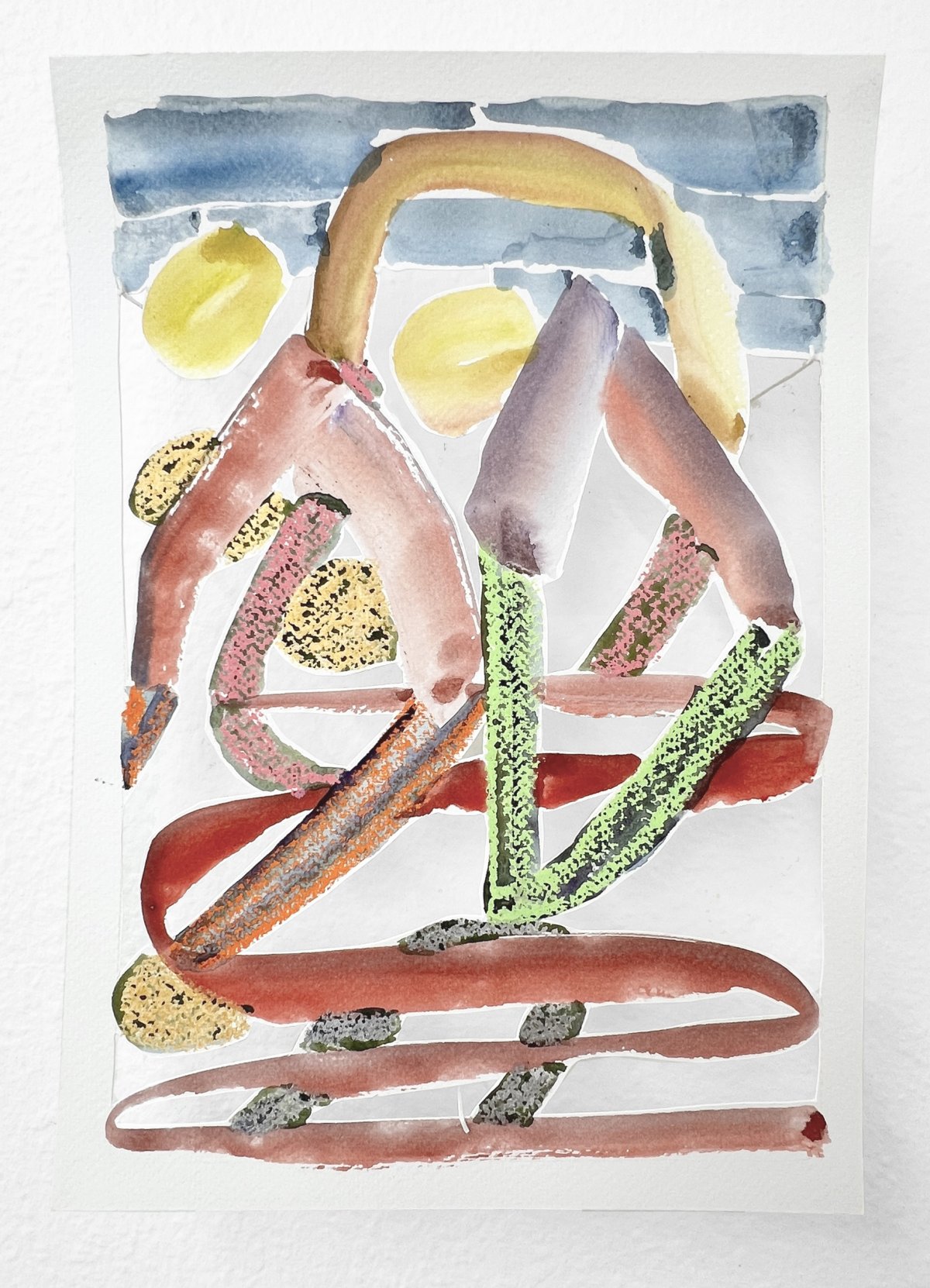
Yasmin Dubrau’s delicate materiality - watercolor and pastel on perforated paper - works in productive tension with the forms depicted and isolated within the imagery. Abstracted mountains, brick walls, brushmarks resembling flowing water, and the shadows cast by the resulting forms create a nexus of repeating elements. These elements construct the complete image through sinewy connections - Then the fat is trimmed - Dubrau removes the remaining white paper with a scalpel, constricting the colored forms and giving an object-like physicality to the otherwise delicate cut-outs. When installed away from the wall, the works produce actual umbra and penumbra, extending the image beyond the surface of the paper and into the surrounding space.
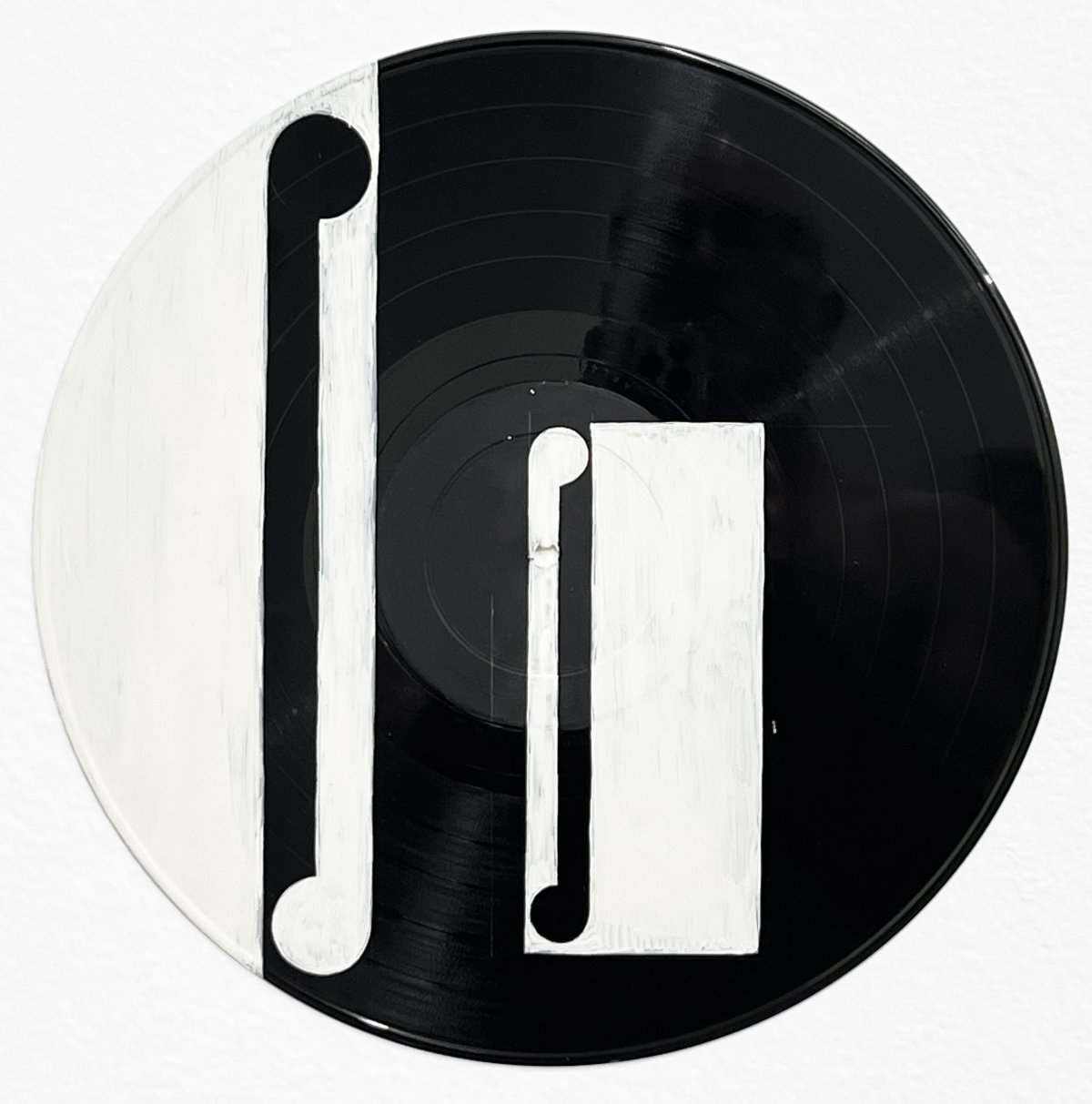
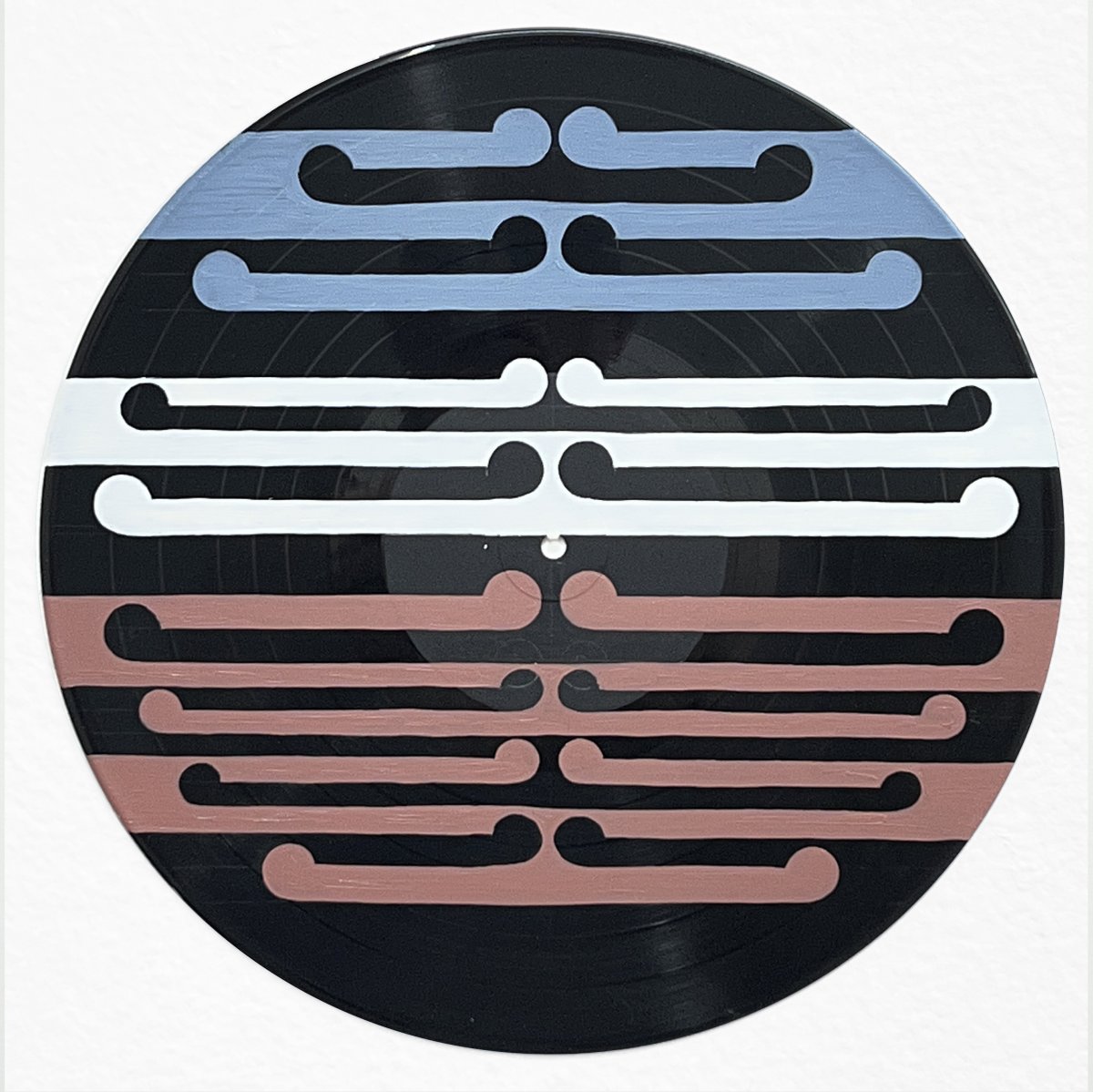
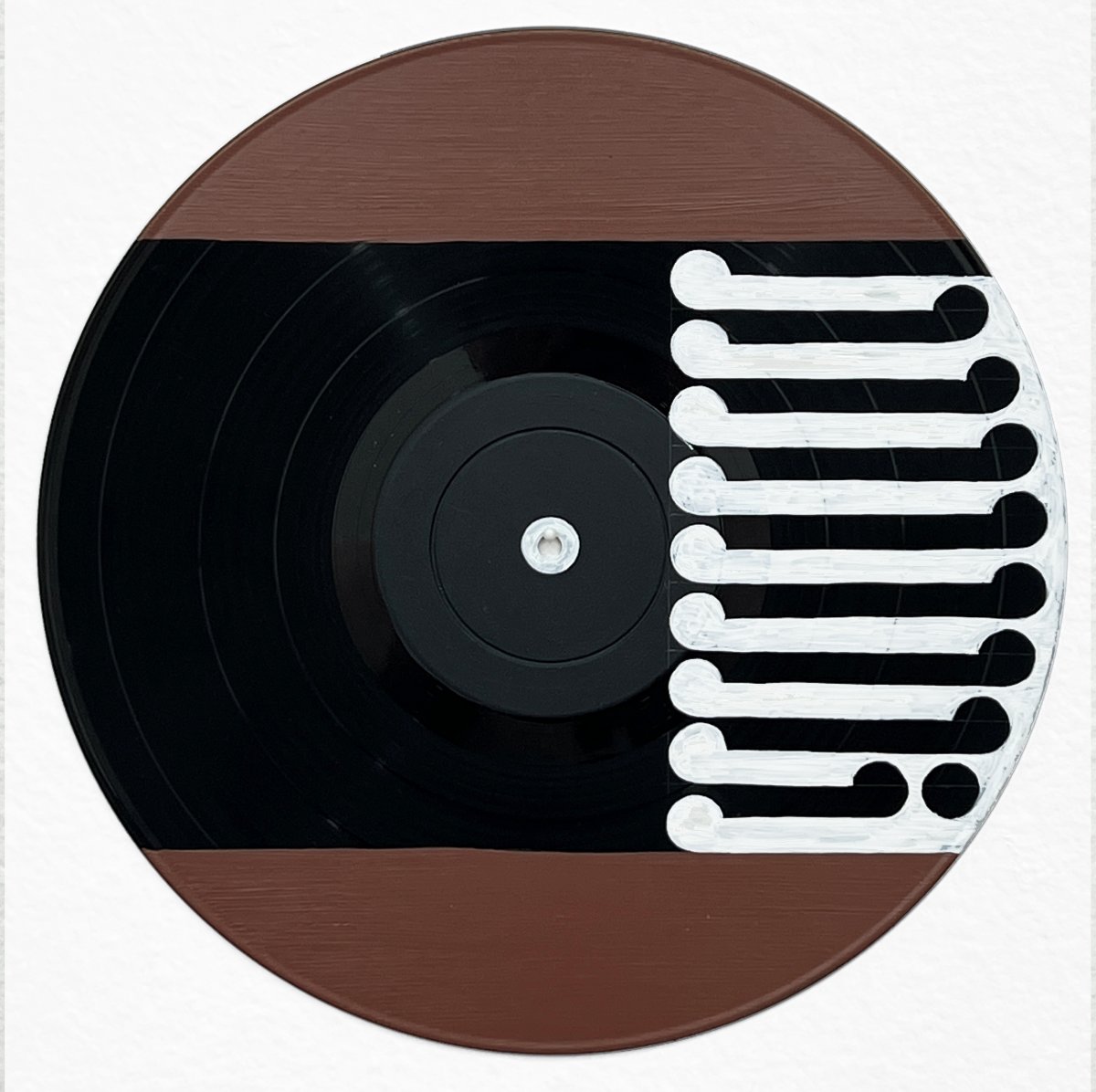
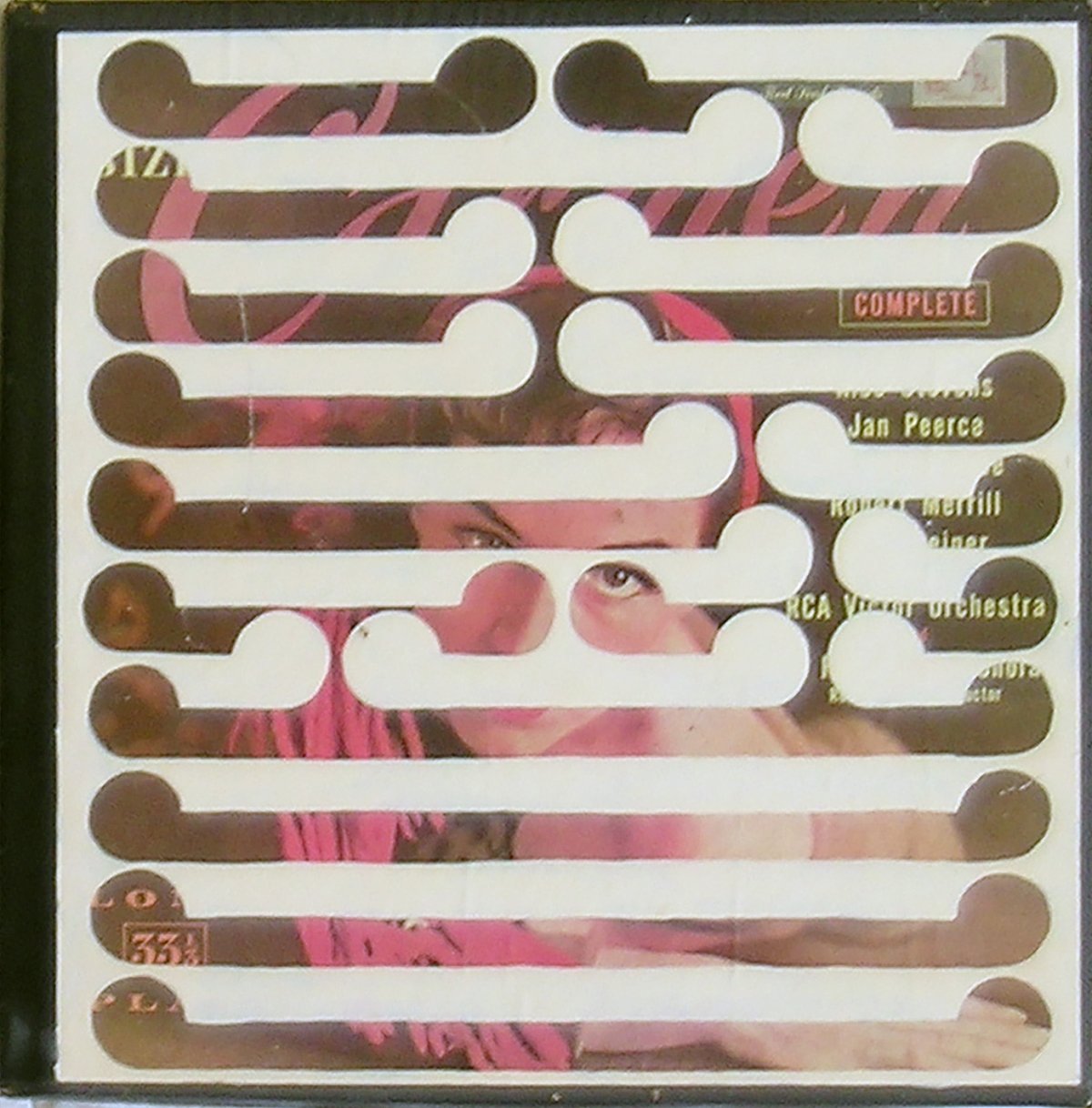
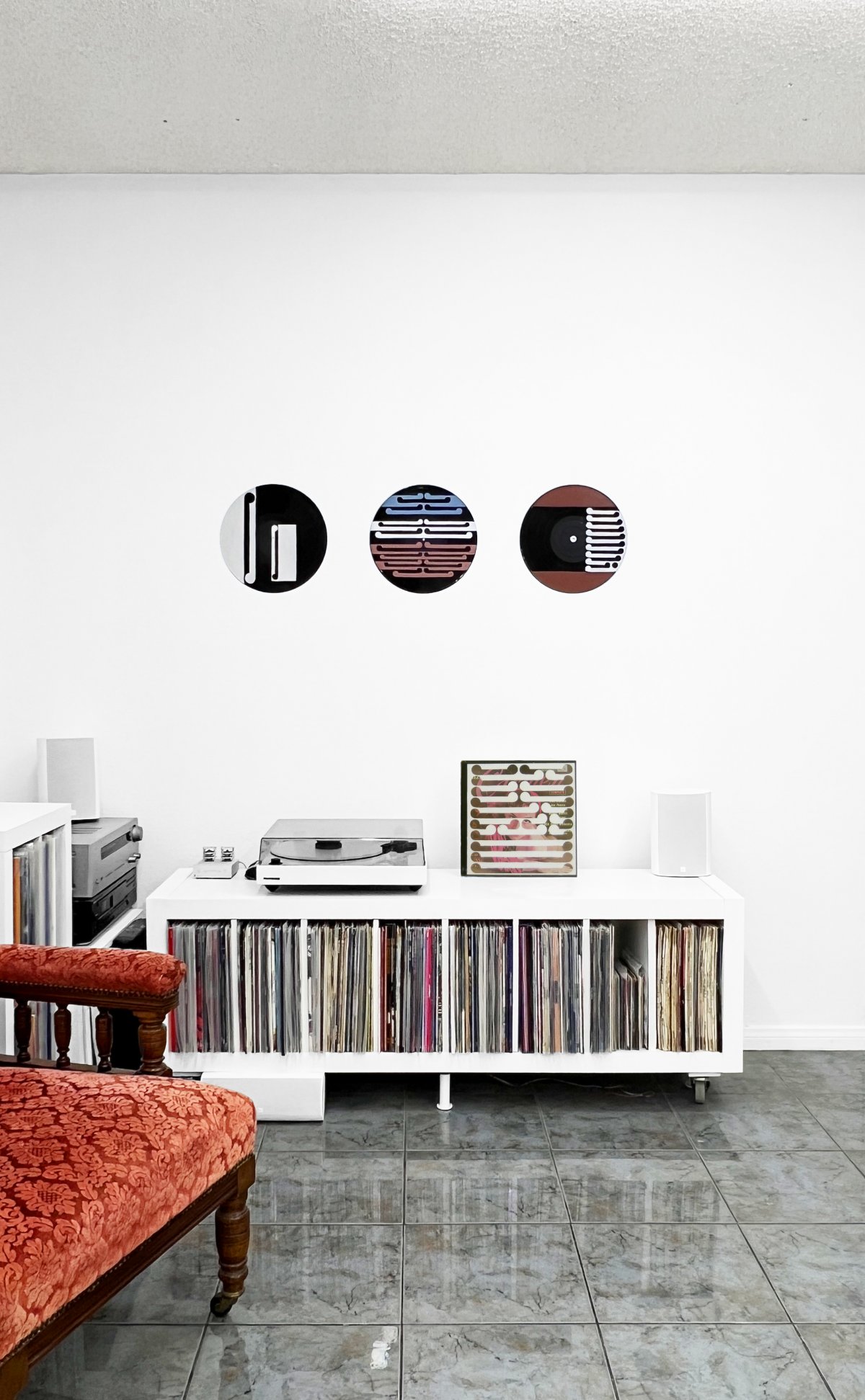
Matthew Couper’s early works from 1999 reference the work of Aotearoa/New Zealand abstract pioneer Gordon Walters. Walters’s culturally complicated paintings appropriated the Māori koru motif—an unfurling fern frond—and transformed it into a form of proto-Op art. Couper takes up this history of appropriation by painting Walters’s motifs onto LP records. The tondo format of the LP repeats the “stick ending in a ball” pattern characteristic of Walters’s paintings, while the grooves of the record form a continuous spiral. The physical structure of the record therefore becomes conceptually entangled with the koru, whose unfurling form has been understood as a representation of continuity, regeneration, and lifecycles. Couper’s painting therefore sits inside several histories at once: Walters’s paintings, the Māori koru, the LP as cultural object, and the spiral mechanics of recorded sound.
When used consciously, Mise En Abyme is not just a visual game, it can be used as a political, cultural critique or a sense of place through pattern recognition.. In the context of this exhibition in Las Vegas, it can also ask what it means to live in a city designed to distract, simulate, and perform. When artists engage abstraction and recursion, they push back against the flattening effects of spectacle by revealing its machinery of looping forms, mirrored signs, abysses to get lost in. As viewers, the intensity of recursion, repetition and pattern recognition help us see more clearly and allow us to be lost in the abyss of reflection.
We enter the image and find another image waiting inside it.
____________________________
CouperRuss / Las Vegas, NV / Sept 10 – Nov 7, 2026
For appointments to view the exhibition at CouperRuss in Las Vegas, email couperruss@gmail.com