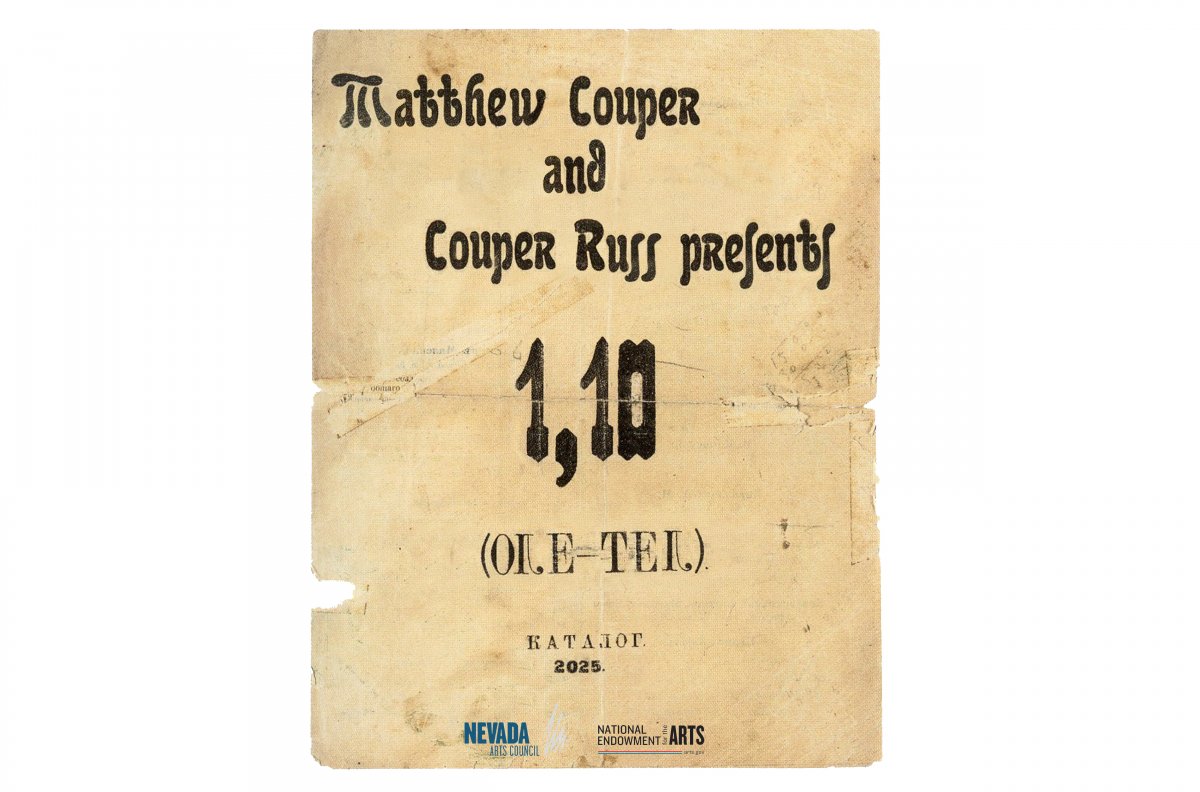
Matthew Couper1,10 : A Supercentenary of Malevich's Suprematism
November 8, 2025 - January 18, 2025
One hundred and ten years ago, the groundbreaking group exhibition Last Futurist Exhibition of Paintings 0,10 (pronounced "zero-ten") was opened in Saint Petersburg, Russia (then Petrograd).
This historic exhibition introduced Ukraine-born artist Kazimir Malevich's (1879 - 1935) first non-objective paintings, which he grouped under the title of Suprematism —Malevich's aim of creating an abstract art based upon the supremacy of pure artistic feeling" rather than on the figurative depiction of real-life subjects. The enigmatic title, "0,10," symbolized a dual concept: “Zero” marked a beginning—a fresh starting point in painting—while “Ten” referenced the number of artists initially scheduled to participate (though, in the end, fourteen artists exhibited).
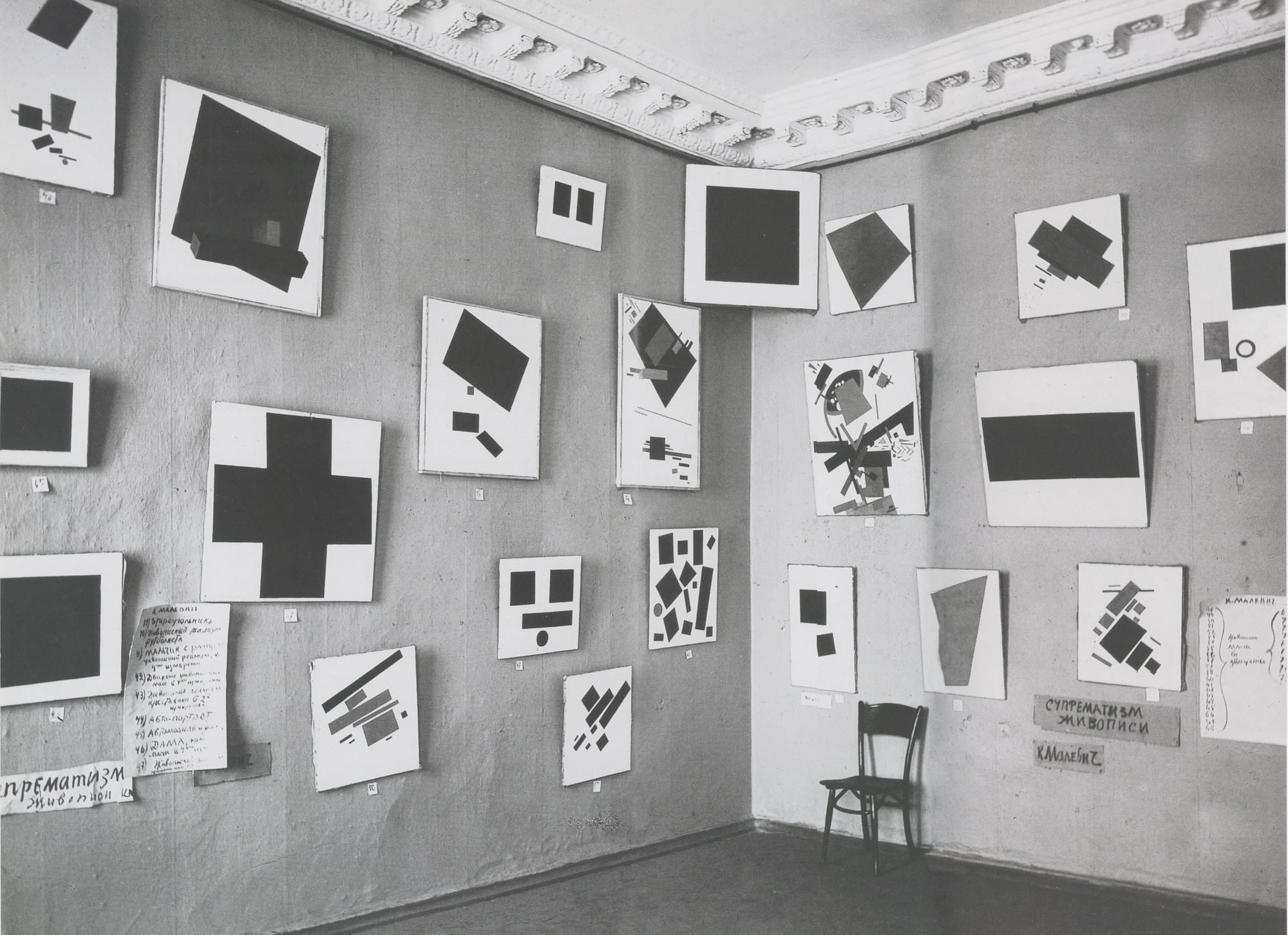
Only two photographs survive of Malevich's works in the exhibition—a cropped focus of a seated Malevich with fellow artists Olga Rosanova and Xenia Boguslavskaya and a view capturing the now-iconic corner installation of Malevich’s still-wet Suprematist paintings. Notably, his Black Square was hung in the upper corner, traditionally reserved for the Russian ikon of Christ Pantocrator.


The work of Malevich has been an important touchstone to Couper, first seeing Malevich’s paintings in person in 1998 at City Gallery Wellington (Aotearoa/New Zealand). One of the works on loan from Amsterdam's Stedelijk Museum included Eight Red Rectangles (1915)—a painting Couper had studied in art history books and noted at the time, “... There were layers of overpainting, corrections, pencil lines, and thick, cracked oil paint.The paint was really worked. Its small, intimate scale shocked me, as I had mostly associated non-objective painting with clean, large, and precise works. This piece, for all its ‘hard-edge-ness’, was gestural, intense, aged and grubby, yet its composition held a galaxy within…”
"...I’ve referenced Eight Red Rectangles in my own work many times. In 2005, I reinterpreted it as text and exclamations, then in 2009, as a series of nailed wooden forms. I revisited the concept again in 2015 to mark the centenary of Suprematism. The painting turns up in many of my Spanish Colonial, Baroque-type paintings. When I began exploring isolated island forms in 2019, the memory of that painting reignited my creativity and inspired new works…”
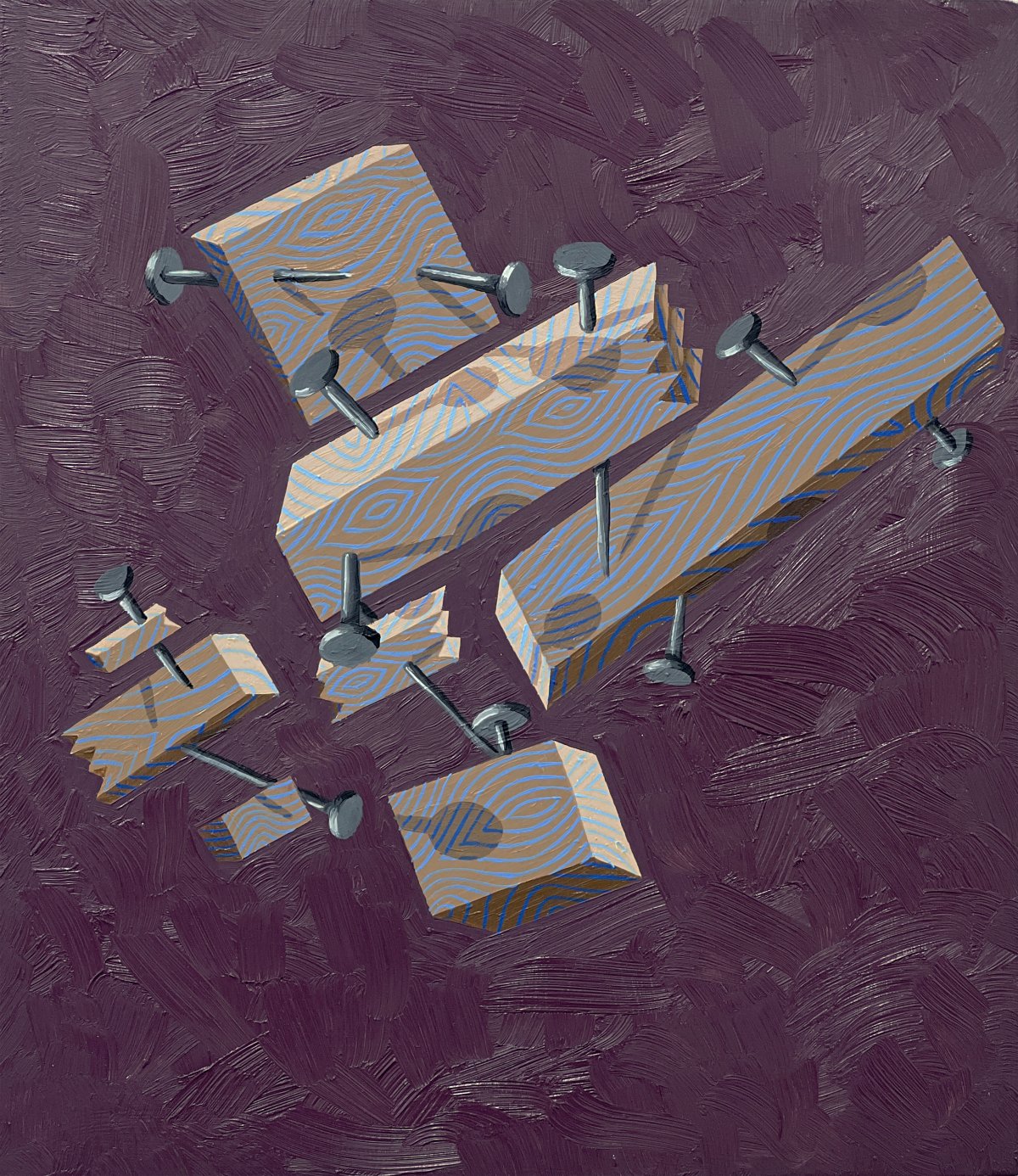
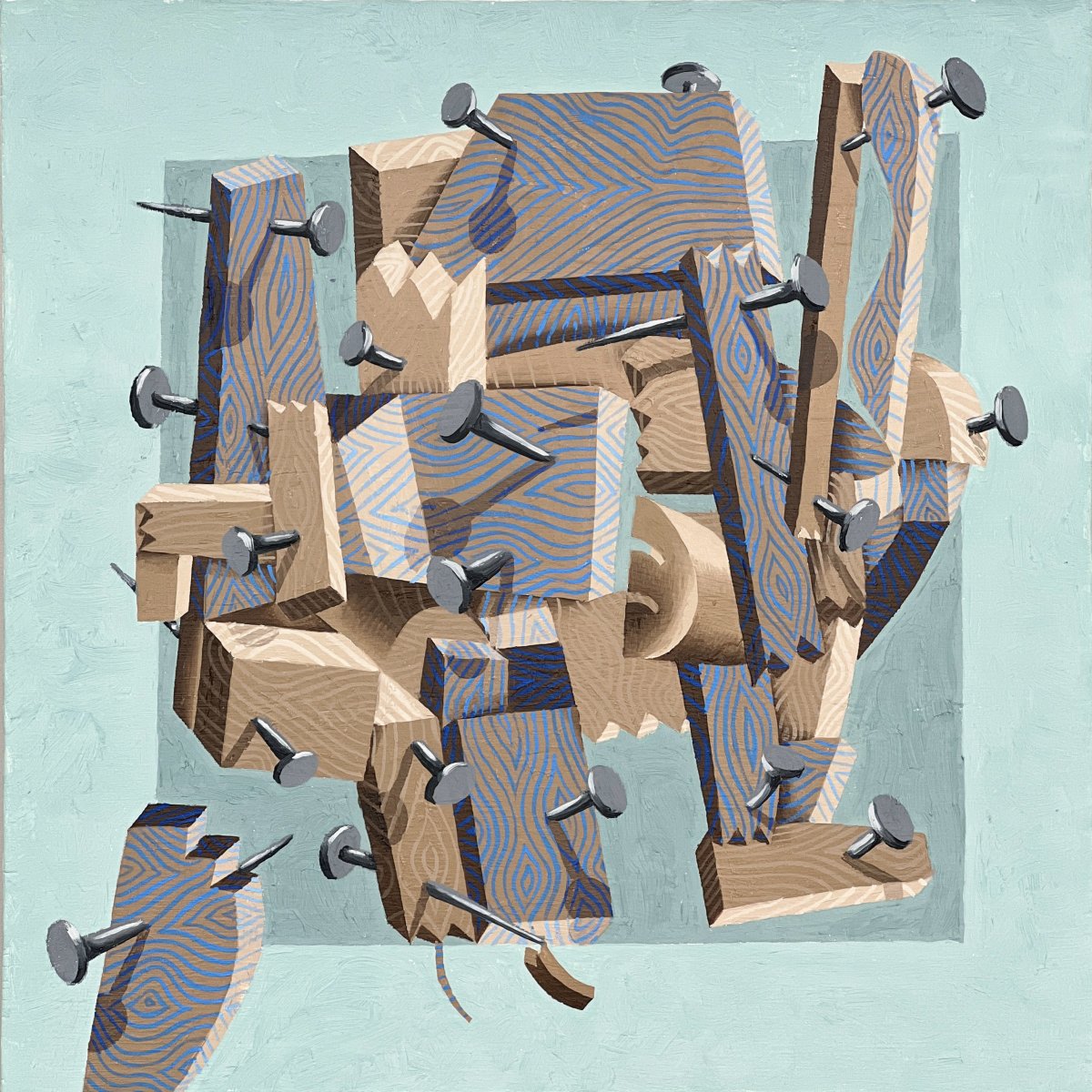
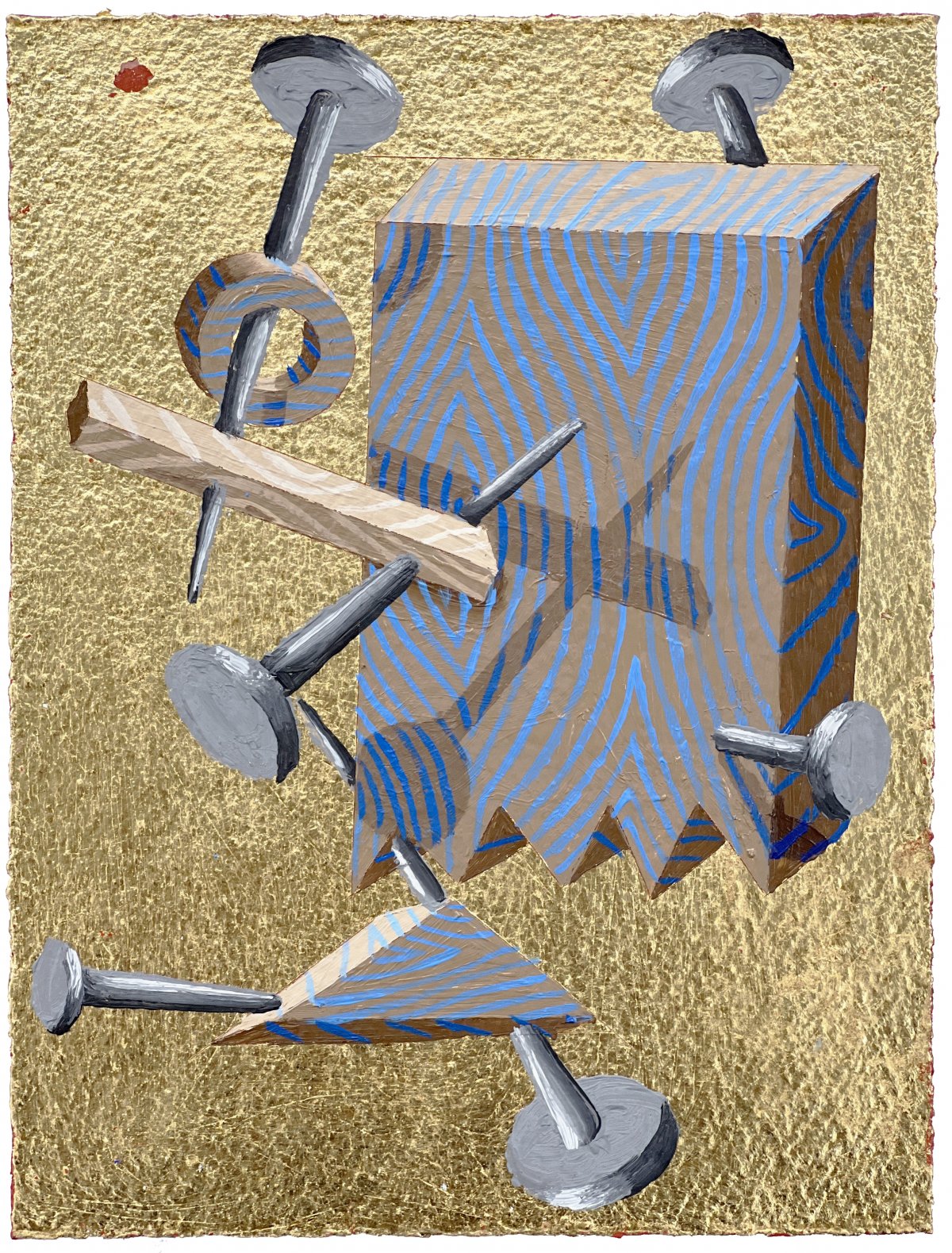
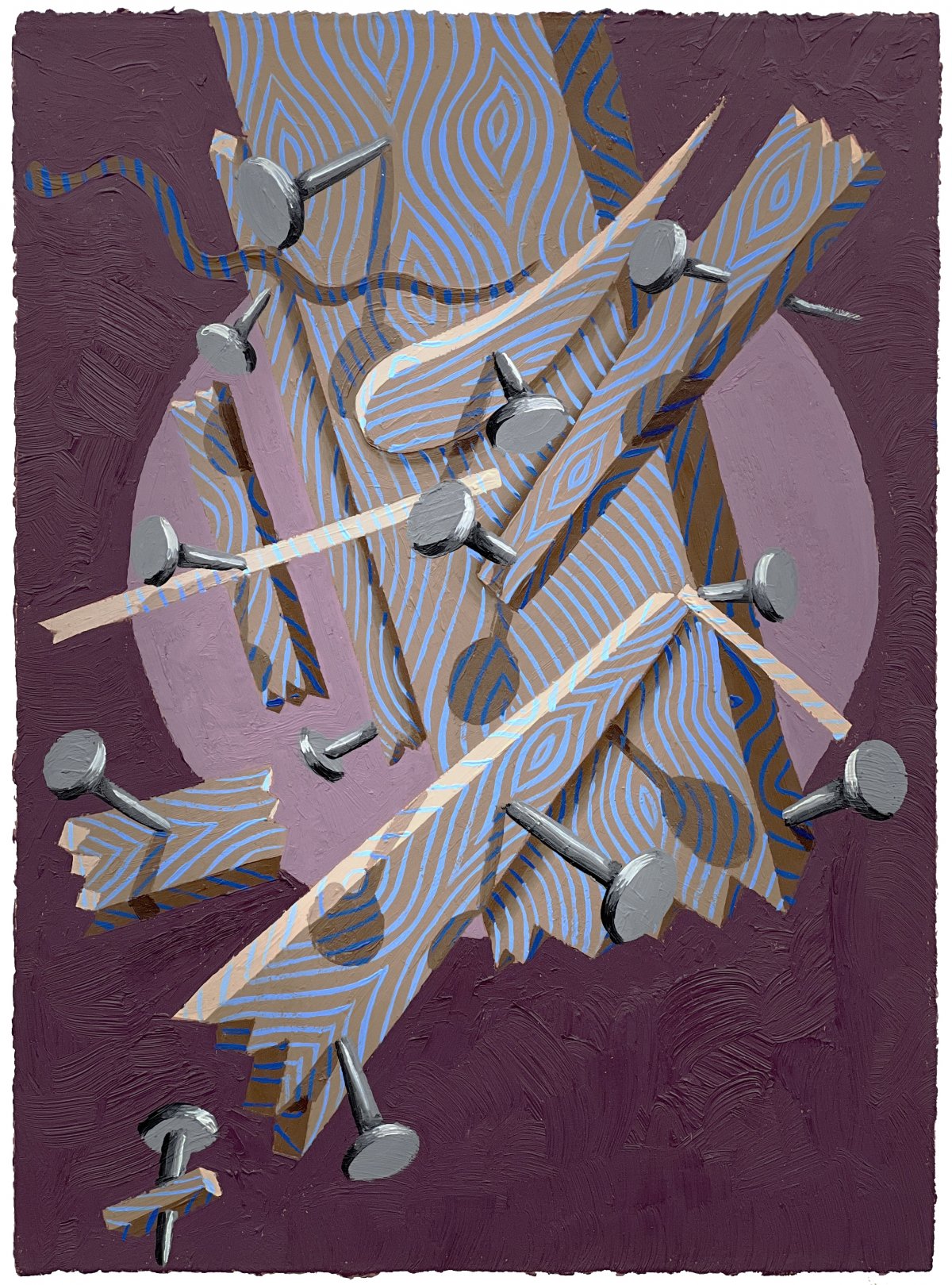
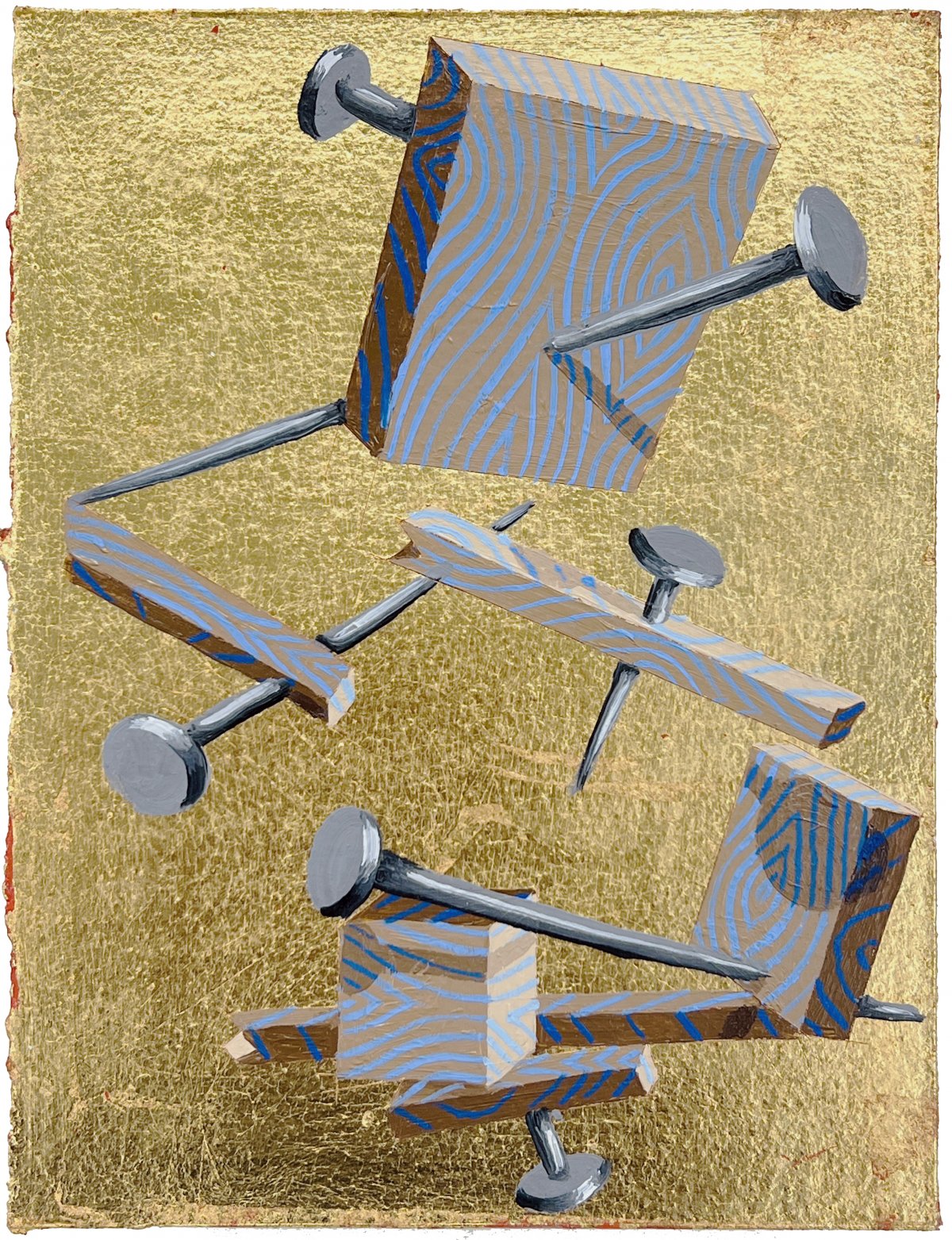
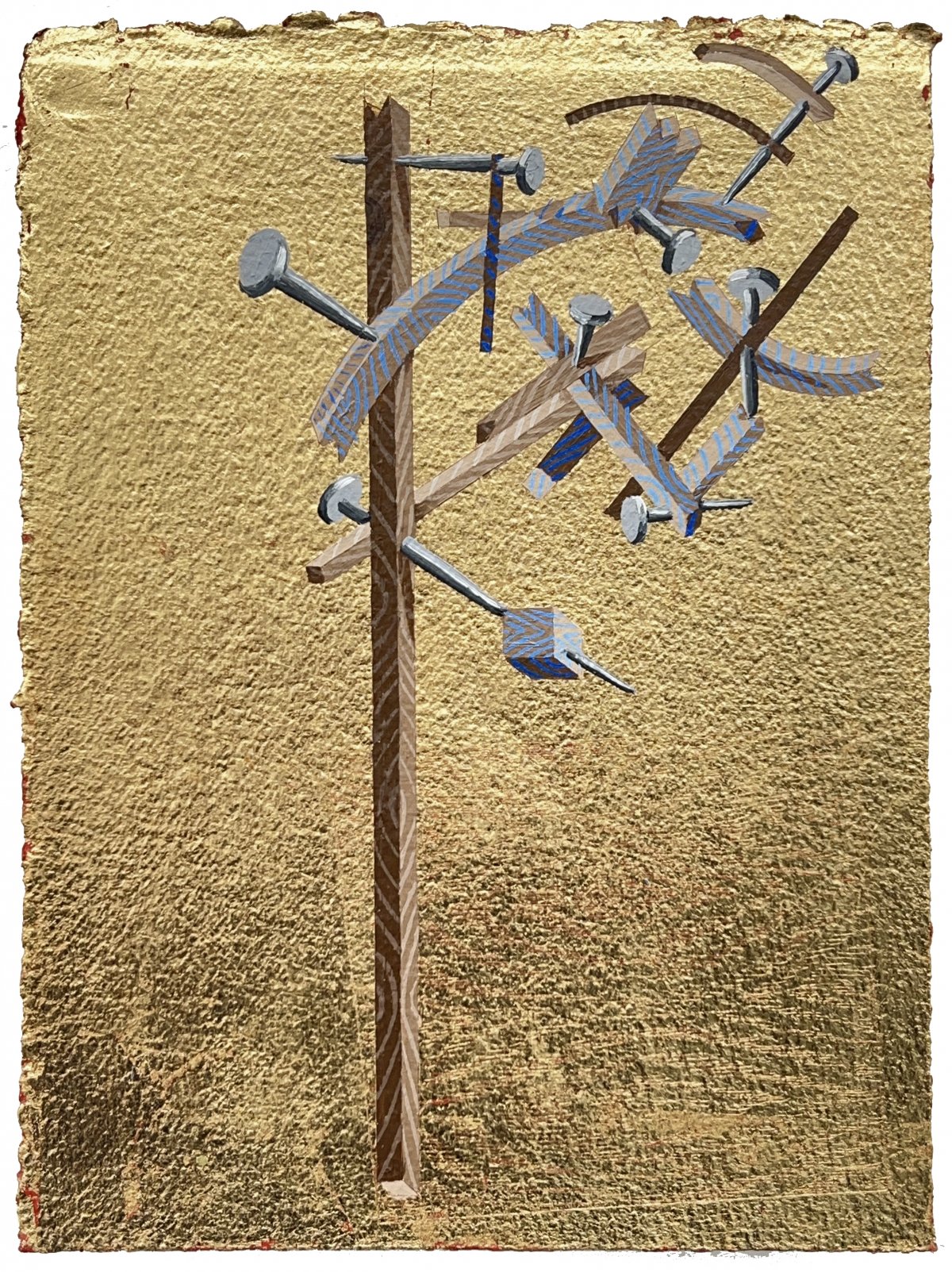
In 2014, during a major Malevich retrospective at the Tate Gallery and the upcoming centenary of Suprematism, Couper began reconfiguring Malevich’s Suprematist paintings as three-dimensional, volumetric paintings. Inspired by Malevich’s reinterpretation of the ikon, Couper constructed compositions from blue, wood-grained lumber—cut, broken, punctured, and joined with large-headed nails.The series as titled ‘100 Rings’—referencing the centennial age of the paintings as the growth rings of a tree, ready to be figuratively milled to create his paintings. Aleksandra Shatskikh’s book Black Square (2012) particularly influenced him; her description of Malevich’s proto-Suprematist works as "hunks of wood" resonated deeply. For Couper, the solid wood forms became a symbolic reference to the crucifixion, reflecting his Spanish-colonial Baroque influences.

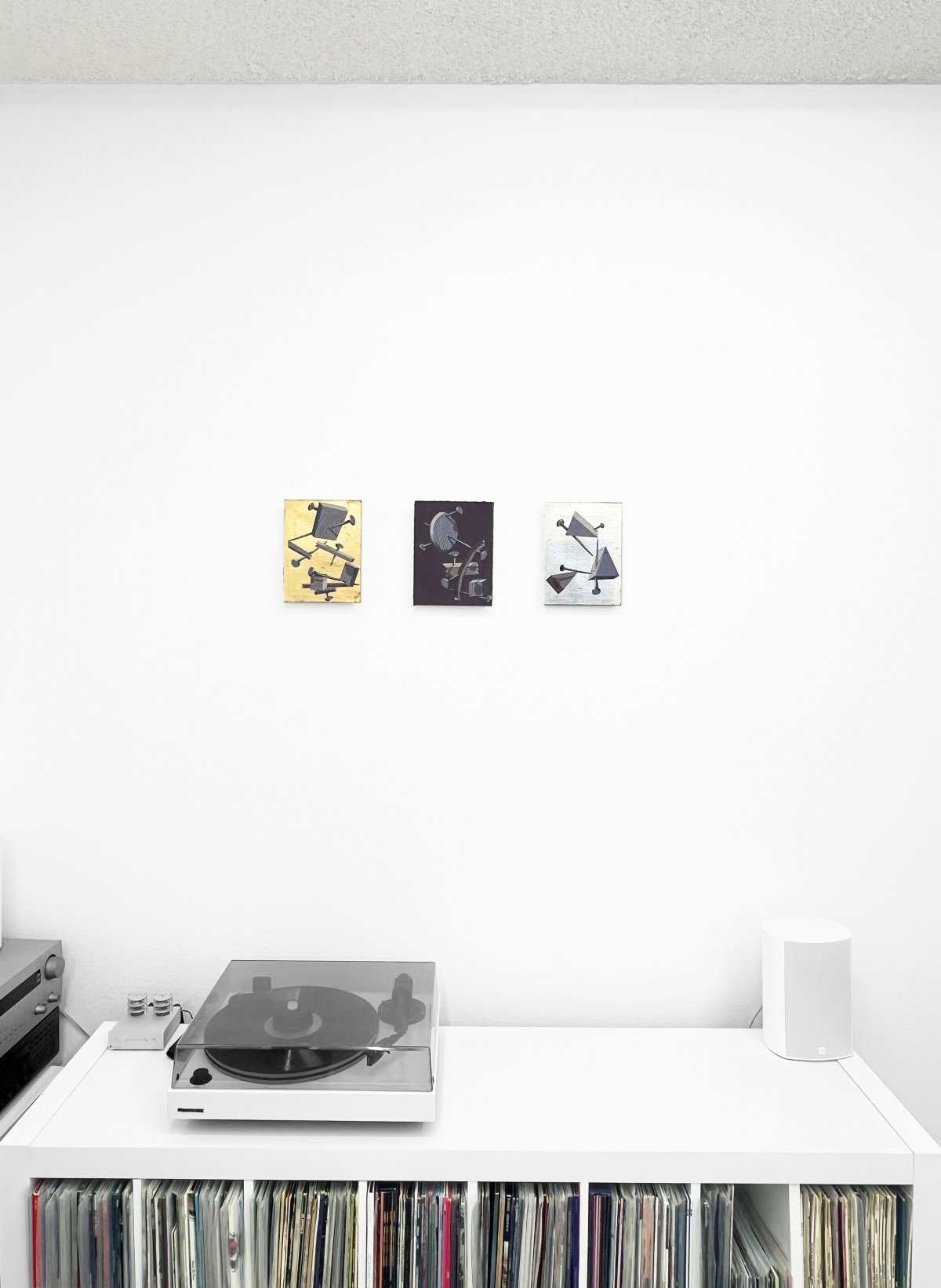
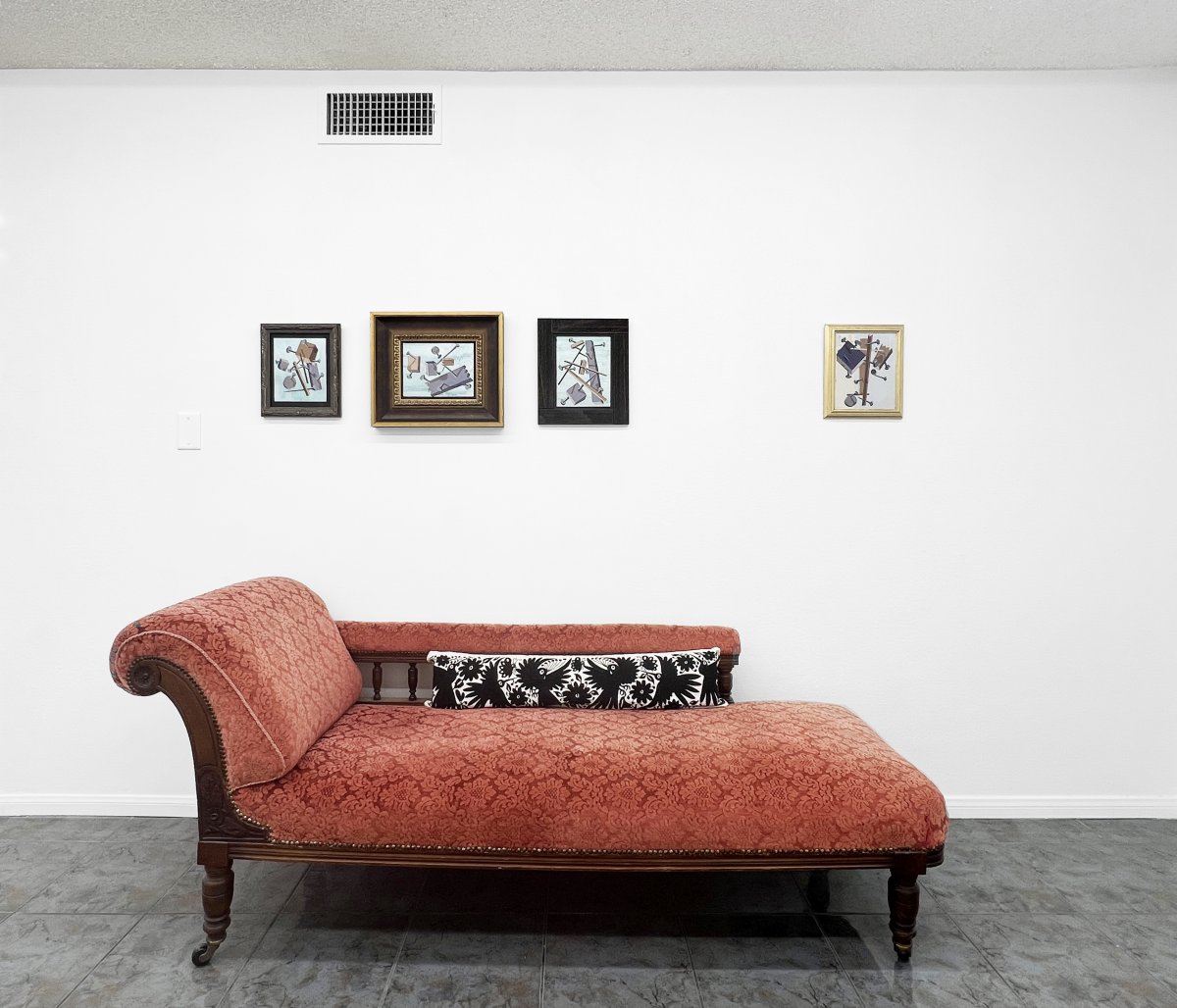
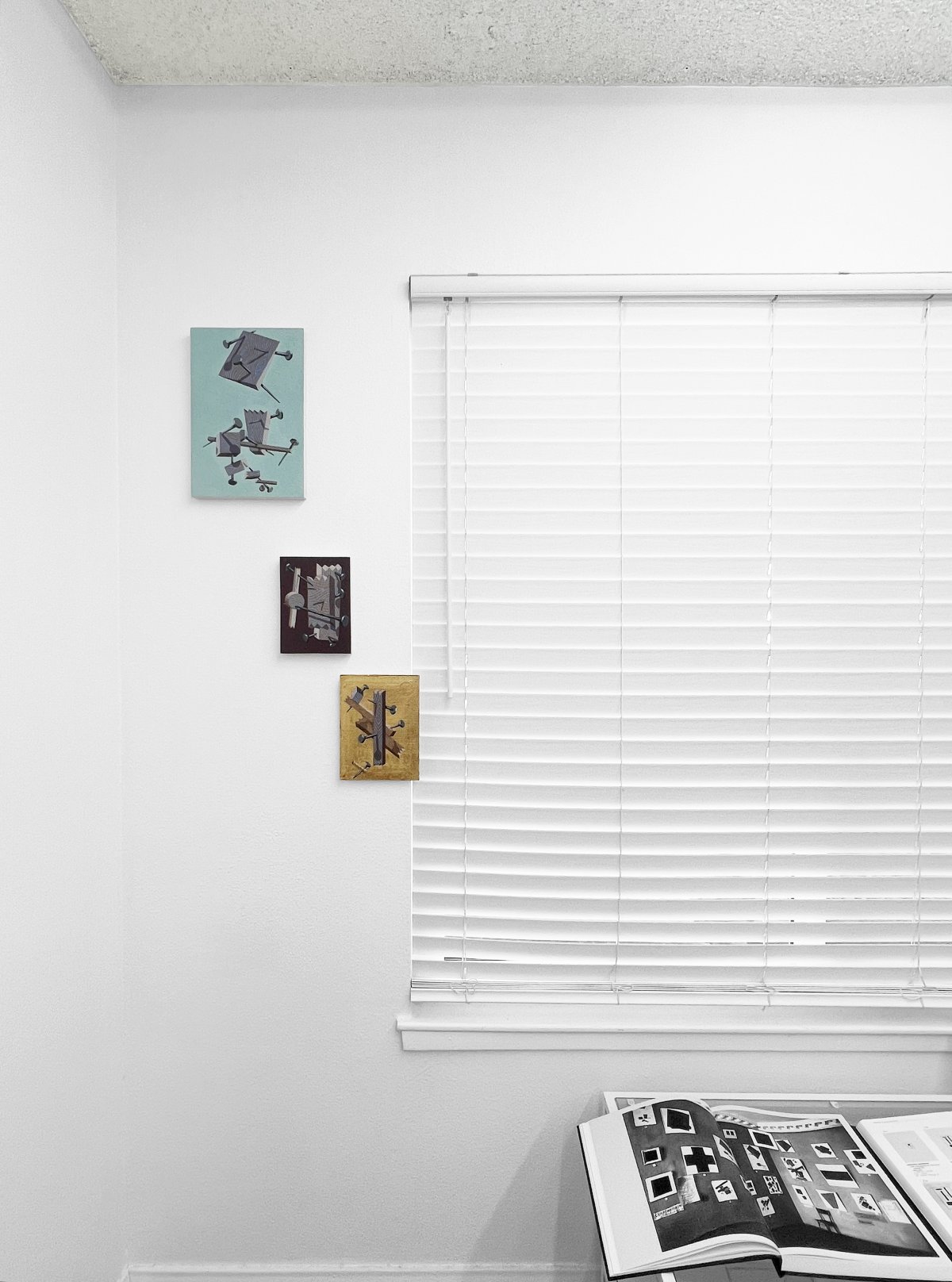
In 2022, Couper acquired a rare copy of Andrei Nakov’s first French catalogue raisonné on Malevich. Using its black-and-white photographs as a guide, he began recreating all 687 paintings, sketches, prints, and sculptures from Malevich’s Suprematist period with the pared-back forms of woodgrain, lumber and nails. To date, Couper has completed over 140 works. The first group of paintings were exhibited at Thermostat Gallery in Palmerston North (Aotearoa/New Zealand) in March 2024 and the second presentation at MAGMA Galleries in Melbourne/Naarm, Australia in April 2025. This exhibition coincides with the 110th anniversary of the opening of Last Futurist Exhibition of Paintings 0,10 on the 15th of December.
This exhibition reinterprets Malevich’s Suprematist vision through a contemporary lens, juxtaposing the utopian ideals of early abstraction with the hyperreal spectacle of Las Vegas, Nevada, creating Futurist echoes in the desert. By reconstructing Malevich’s radical forms in oil paintings, the exhibition creates a bridge between the past and present, in a new location that has never exhibited the works of Malevich, nor applied the aesthetics of Suprematism in a city rife with commercial maximalism. Las Vegas, by its populist nature, has trod a different aesthetic route to that of fine art. Robert Hughes noted in American Visions, “The impossibility of competing with [Las Vegas] streetscape sometimes reaches the proportions of farce ... part of its appeal to the Pop sensibility was that it contained an infinity of signs all plugging the same product: luck. Now the product is abstract ... Its monuments, the city lights, are conceived on a scale much beyond anything that most artists ever get to work on ... no wonder that this festive junk food for the eye has had such an appeal to artists and critics.”
Las Vegas provides an interesting foil to presenting the work in this context. By reimagining Malevich’s Suprematism within the context of Las Vegas—one of the most visually overstimulating environments on Earth—this exhibition questions the role of abstraction today. Is there still a space for utopian artistic vision in an era dominated by image saturation and digital ephemera? 1,1 0 proposes that Suprematism and formalism in painting is not a relic but a living language—one that can still offer new ways of seeing, even in the light-emitting glow of the Strip.
Couper’s ongoing Suprematist recreations are primarily small oil paintings on panel or canvas, occasionally accented with gold leaf to double-back on Malevich’s ideological references to Russian ikon paintings. These works are often the gateway to more complex pieces in Couper’s oeuvre such as his Isolation Paintings, of which a group of large canvases were exhibited at MAGMA Galleries (Melbourne, AUST) in 2023, SPRINGBREAK Art Fair (NYC, USA) and La Luz De Jesus Gallery(Los Angeles, USA) in 2024.
By presenting 1,10 : A Supercentenary of Malevich's Suprematism in Las Vegas, this exhibition pays homage to the birth of Suprematist painting and its lingering specter on the pursuit of painting in the 21st century, connecting the utopian impulses of Malevich and the constructed reality of Las Vegas in Nevada.
All artworks are available to purchase. Please email here to request a catalog.
A 62-page color catalog is available to purchase here.
You can listen to an interview with Mike Prevatt on KNPR here.
This exhibition has been made possible with funding from the National Endowment of the Arts and the Nevada Arts Council.